
Madagascar Pygmy Kingfisher
Corythornis madagascariensis
Least Concern
 ©Carmelo López Abad
 ©John Sterling
 ©Thomas Fuhrmann
STATUS
Least Concern
SIZE
Body length: 5 to 6 in (12.7 to 15.2 cm)
Weight: 0.5 to 0.7 oz (15 to 20 g)
HABITAT
Rainforest
Dry forest
Savanna
DIET
Insects and small animals
LIFESTYLE
Diurnal
Arboreal and terrestrial
Solitary
REPRODUCTION
Young: 3 to 5
THREATS
Habitat loss
Deforestation

INTERESTING FACTS
Unlike most kingfishers, the Madagascar pygmy kingfisher does not go fishing for its meals. It is an insectivore that hunts from a perch, swooping down to the forest floor to snatch insects, spiders, and frogs out of the leaf litter.
Its vibrant orange-and-white plumage might seem flashy, but it actually serves as camouflage. The colors allow them to blend into the dappled, filtered light of the dense forest understory.
Like most kingfishers, this species doesn’t build nests in trees. Instead, it digs small burrows into earthen riverbanks or soil mounds to raise chicks.
The Madagascar pygmy kingfisher is one of only two kingfisher species native to Madagascar—the other is the Malagasy kingfisher (Corythornis vintsioides).
Characteristics
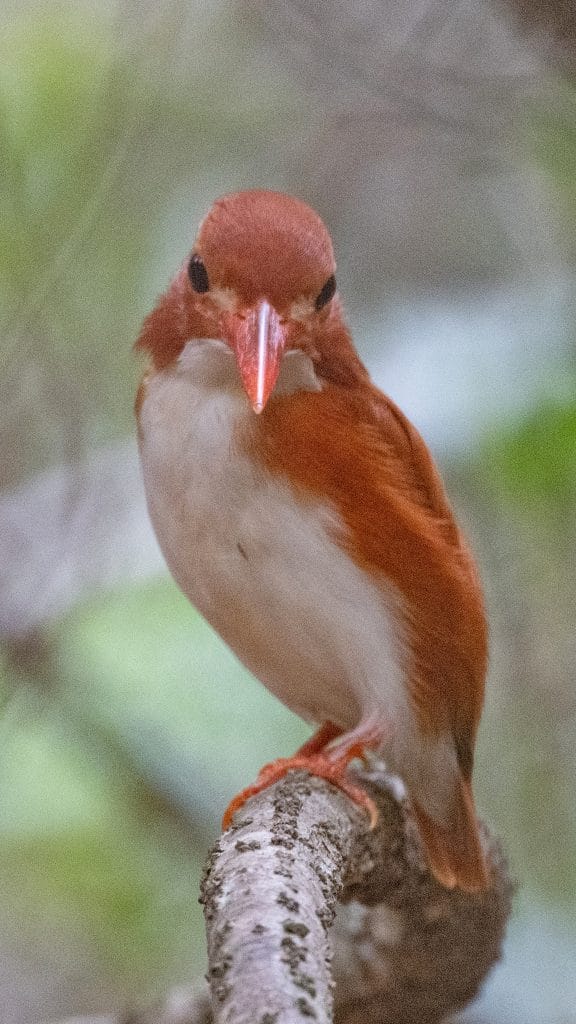
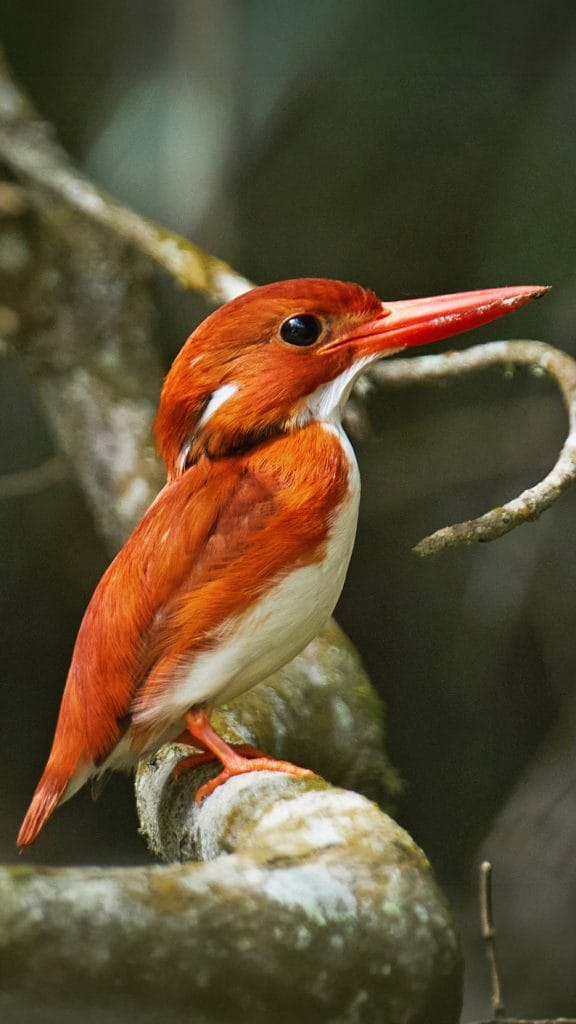
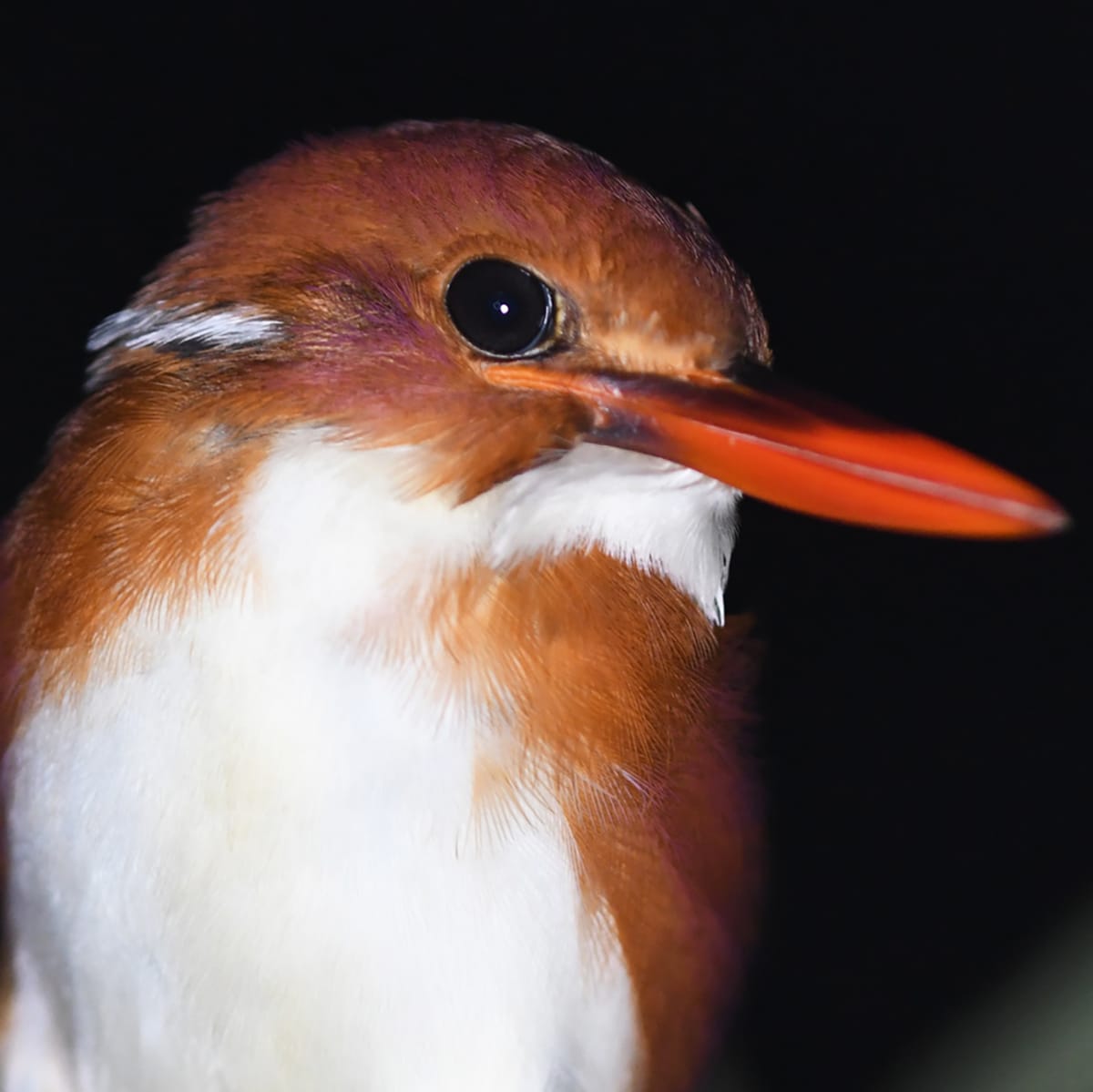
The Madagascar pygmy kingfisher (Corythornis madagascariensis) is one of Madagascar’s most charming bird species, but it is sometimes overlooked. Measuring only about 5 to 6 inches and weighing only 0.5 to 0.7 ounces (15 to 20 grams), it is one of smallest kingfishers in the world. Yet its appearance is unmistakable: the crown, sides, and back are cinnamon-orange to orange-red in color, with a blaze of white under the chin and down the chest. The wings have contrasting black secondary feathers, and the beak and feet can be pink to a striking red. The beak is shorter than in many kingfishers, which reflects one of its interesting characteristics: it is a forest dweller and eats insects, rather than fish.
 ©Ken and Mary Campbell
Many members of the kingfisher family display marked sexual dimorphism, but male and female Madagascar pygmy kingfishers appear remarkably similar. Juveniles tend to be duller, with a slightly browner appearance. Taxonomically speaking, the species was formerly placed in the genus Ispidina before molecular studies supported its placement within Corythornis, alongside several African forest kingfishers.
 ©Gregoire Dubois
Habitat
This bird species is endemic to Madagascar and occurs across much of the island, in rainforests, dry forests, savannas, and along the coast. Because it feeds on insects rather than fish, the presence of large bodies of water is not a habitat requirement. Although individuals may be found near streams, they are often encountered far from open water.
The species generally prefers habitats with dense vegetation, abundant leaf litter, and plentiful invertebrate prey. It can also be found in somewhat disturbed areas, provided there is still sufficient understory. Within the forest, these birds are usually found between ground level and several meters above it. This reduces competition with other insectivorous birds that live in higher canopy layers.
 ©lemurtaquin
Foods and Feeding
Despite belonging to a family famous for catching fish, the Madagascar pygmy kingfisher is an insectivore. It occupies a niche more comparable to that of a forest flycatcher or understory insect hunter than a fisher. Typical prey includes beetles, grasshoppers, crickets, spiders, caterpillars, and moths, with an occasional small lizard or frog.
The species employs a classic sit-and-wait hunting strategy. Perched quietly on a low branch, it scans for movement below. Once prey is detected, the bird launches in a swift downward attack, seizing the victim with its bill before returning to a perch. Larger prey items are often beaten repeatedly against a branch to disable them before being swallowed, an impressive way of handling big prey for such a little bird.
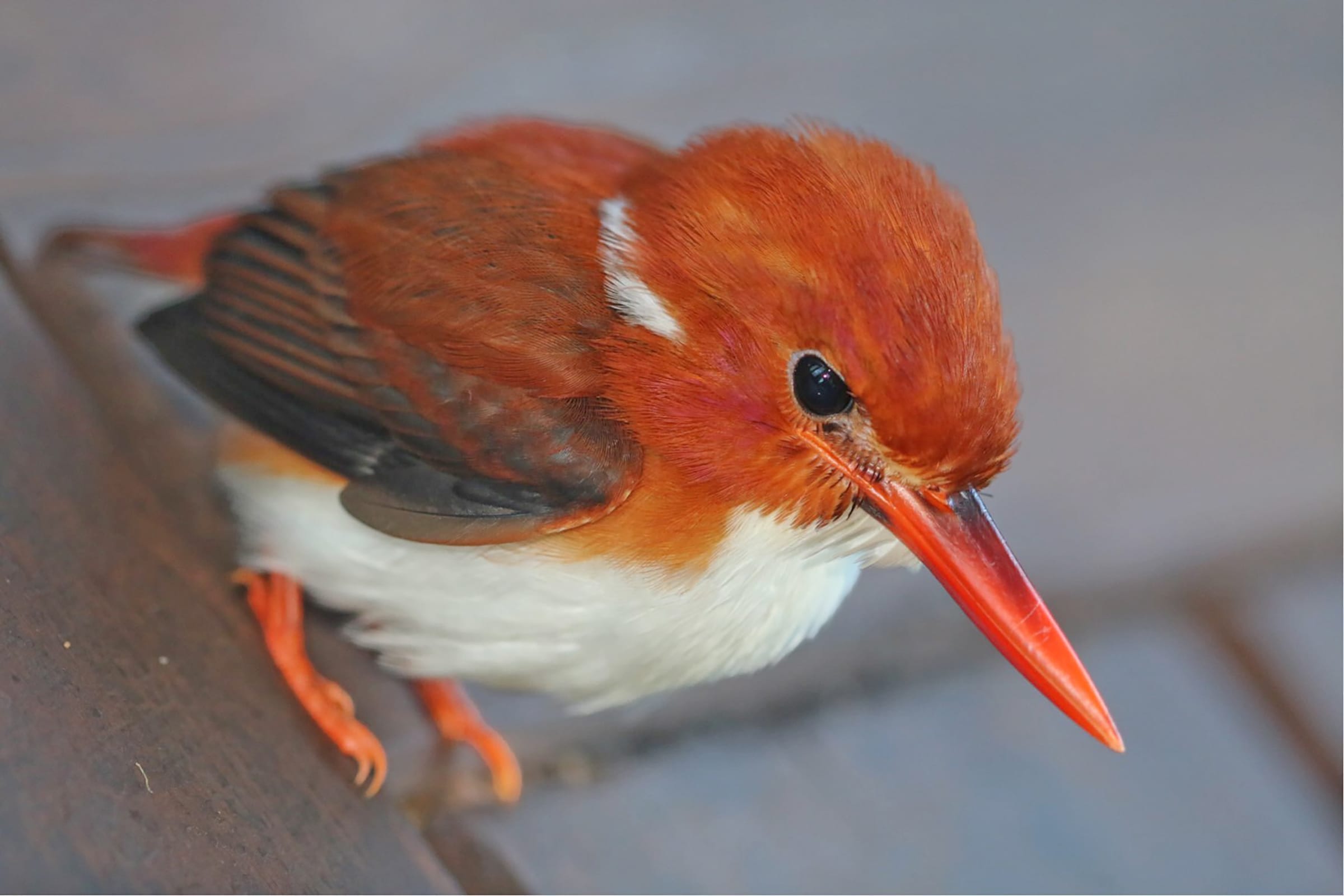 ©Cédric de Foucault
Behavior
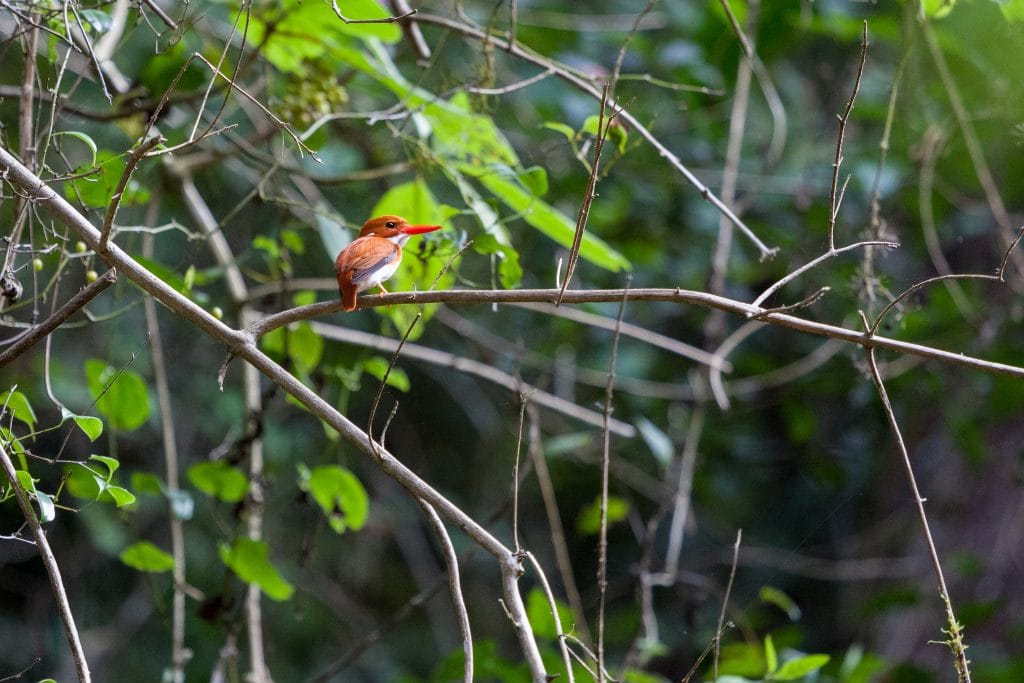
Unlike larger kingfishers that tend to perch in exposed locations overlooking water, this species favors low branches, vines, and saplings within dense vegetation. Individuals may sit motionless for extended periods, scanning the forest floor for insect prey. Their hunting style relies on patience and precision rather than speed and pursuit..
Their flight is rapid and direct, consisting of short bursts between perches. When disturbed, these birds often disappear quietly into thick vegetation rather than giving alarm calls. Vocalizations include a series of high-pitched whistles that can be surprisingly difficult to pinpoint in dense forest. During the breeding season, pairs become more vocal, using calls to maintain contact and defend territories.
The Madagascar pygmy kingfisher is typically solitary, except during mating and nesting. It is territorial, and males frequently patrol breeding areas and engage in displays involving posture changes, wing flicking, and vocal exchanges. Territorial boundaries are actively maintained throughout the reproductive season, although direct aggression is uncommon.
Reproduction and Life Cycle
Breeding occurs during the rainy season, from October through January. Madagascar pygmy kingfisher pairs excavate a nesting tunnel into the soil of stream banks or embankments along trails. The nesting tunnel is narrow, with only enough room for one bird at a time, and it extends from 12 to 31 inches (30 to 80 cm), ending in a small chamber where the eggs are laid. This structure provides protection against unwanted visitors and larger animals that might steal the eggs. Both the male and female work on excavating the tunnel, taking turns over a period of several days of intensive digging effort.
The female lays three to five white eggs. Both parents participate in incubation and chick rearing, sharing feeding duties throughout the nestling period. Nestlings hatch blind and helpless, but they grow rapidly on the protein-rich diet of insects and other small prey. Parents make frequent feeding trips, sometimes delivering dozens of items per day. After fledging, the juveniles remain dependent on the adults for a short period before dispersing and establishing their own territories.
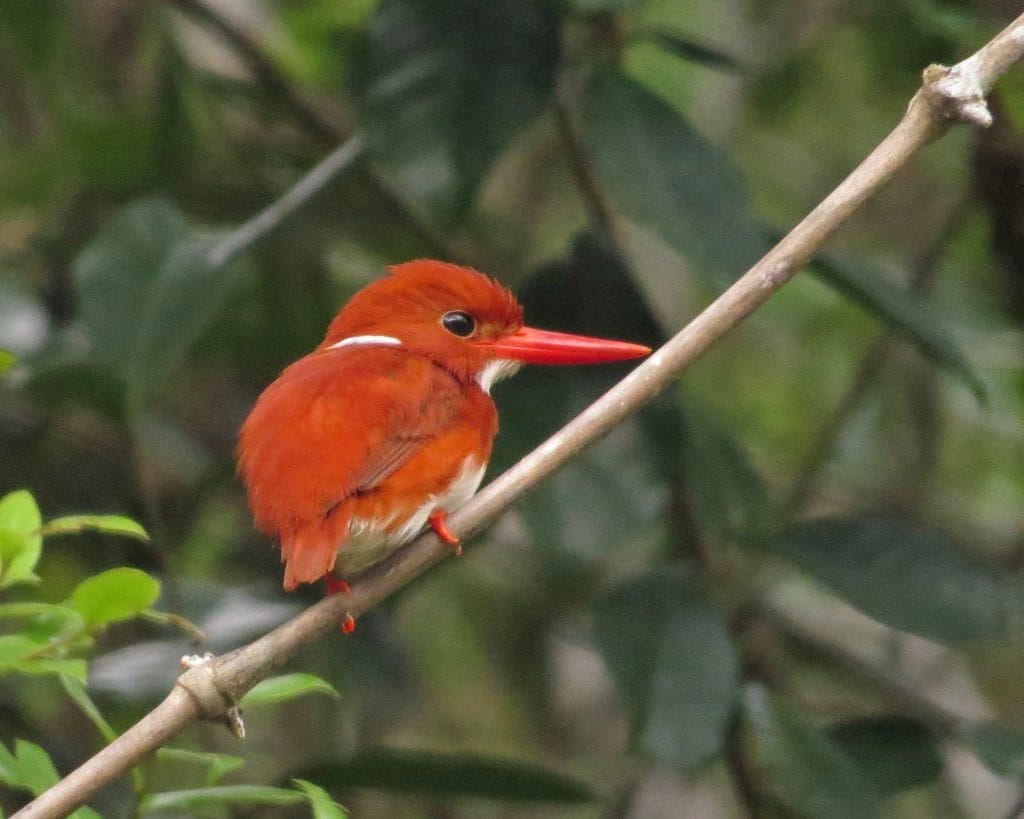 ©Paul Prior
Conservation and Threats
The Madagascar pygmy kingfisher is currently listed as Least Concern and is considered relatively secure compared to many of Madagascar’s most threatened endemic birds. Nonetheless, its future remains closely tied to the fate of the island’s forests. The primary threat facing the species is habitat loss, resulting from logging, charcoal production, forest fragmentation, and agriculture expansion. Because these birds can tolerate some degree of habitat disturbance, they are more resilient than highly specialized canopy species. However, continued destruction of primary and secondary forests reduces available breeding sites and prey availability. Fortunately, the species occurs in several protected areas, including some of Madagascar’s most important rainforest reserves.