

This annual report highlights the extraordinary conservation, research, and community-driven work made possible by our partners, funders, members, and supporters over the past year.
You are invited to explore the Year in Review in the way that suits you best: experience the interactive version directly on our website, or settle in with the flip book version for a more traditional, page-by-page read. Both offer a window into the progress, challenges, and achievements that defined 2025, and the collective effort behind protecting Madagascar’s wildlife and forests.
A Year of Growth and Guardianship
Wildlife Madagascar’s momentum continued to accelerate in 2025, deepening its impact across conservation, research, education, ecotourism, and community empowerment. With three fully operational field sites – La Mananara, Anjanaharibe-Sud Special Reserve (ASSR), and Tsingy de Namoroka National Park – its 75 Malagasy team members are safeguarding more than 150,000 acres of Madagascar’s irreplaceable forests, home to 25 lemur species found nowhere else on the planet.

FOREST PROTECTION
WILDFIRE PREVENTION PROGRAM
FOREST RESTORATION
RESEARCH
EDUCATION AND AGRICULTURAL TRAINING
ECOTOURISM
GLOBAL OUTREACH
STRATEGY
THE ROAD FORWARD
This was a year of remarkable progress and purpose. Wildlife Madagascar launched its first education and agricultural training programs, expanded reforestation and patrol initiatives, and built new research, conservation, marketing, and ecotourism partnerships that are shaping Madagascar’s environmental future. From seed collection and species monitoring to community engagement and livelihood development, every initiative strengthened the organization’s mission to ensure that both people and wildlife thrive across Madagascar’s extraordinary landscapes.

A major milestone this year was the signing of a Memorandum of Understanding (MOU) with Madagascar National Parks, establishing operational coordination for work in both Anjanaharibe-Sud Special Reserve and Tsingy de Namoroka National Park. This collaboration marks a new chapter in united conservation work—ensuring stronger, more effective protection for these parks’ forests, wildlife, and the communities that depend on them.
WILDFIRE PREVENTION PROGRAM
The lemurs of Tsingy de Namoroka National Park depend on the surrounding dry deciduous forests that blanket the park’s dramatic limestone karst canyons. Yet every dry season, these forests are threatened by wildfires – often sparked by slash-and-burn agriculture – that can spread rapidly, endangering wildlife, habitats, and nearby communities. To counter this threat, Wildlife Madagascar launched a comprehensive Fire Protection Program, creating a wide firebreak around the park’s entire boundary and installing water barrels along its periphery to support rapid response efforts. Thanks to the dedication of local communities, a generous grant from Re:wild, an in-kind donation of wildfire fighting gear from the Minnesota Fire Engine Club, vital support from Madagascar Classic Collection’s Namoroka Tsingy Camp, and close collaboration with Madagascar National Parks, the project is providing critical protection for this fragile ecosystem. Led by Fetra Randrianarizaka, the team is also conducting workshops in surrounding villages to share fire safety protocols and sustainable farming practices – empowering communities to safeguard both the forest and their future.
FOREST RESTORATION

Wildlife Madagascar’s Reforestation Program expanded significantly in 2025, now operating nurseries at each of our three field sites. Made possible by the Abraham Foundation and guided by our dedicated Restoration Specialists – Domohina Randrianarisoa (La Mananara), Tafita Ramanantsitonta (Namoroka), and Mamy Andriantsitohaina (ASSR) – our teams are restoring Madagascar’s fragmented forests while supporting community livelihoods.

At La Mananara, we are using an innovative approach by collecting seeds from lemur feces, leveraging nature’s own dispersers to provide the native seeds that ensure we are growing the species of trees they need to thrive. We are using the same technique with fruit bats at Namoroka. Across all sites, thousands of seedlings are germinating and hardening in shaded nurseries before being replanted to reclaim vital habitat and create wildlife corridors that connect isolated forest patches.

This year also marked the launch of our Plant a Million Trees campaign, beginning at La Mananara. The campaign aims to inspire global participation in restoring Madagascar’s forests tree by tree – each one representing hope for wildlife, climate resilience, and community well-being.
Thanks to the generosity of the Abraham Foundation, we expanded local staffing, adding 15 full-time community members, five for each field site, who now play critical roles in nursery management, seed collection, and site maintenance. These jobs bring steady income to local families while ensuring we have the hands and hearts needed to sustain large-scale restoration.

RESEARCH
Wildlife Madagascar’s research initiatives continued to drive scientific discovery in 2025, producing valuable insights into species behavior, habitat use, and ecosystem health.
Graduate Projects

Goodman’s Mouse Lemur Ecology: Vero Ramananjato (PhD student, University of California, Berkeley) is studying the Goodman’s mouse lemur (Microcebus lehilahytsara) at La Mananara to expand our understanding of nocturnal lemur ecology and their vital role as seed dispersers, informing conservation strategies for small-bodied primates. This work is being assisted by Tanjoniaina Rabarijaonina and Gaetan Rakotondrasoa.

Elevational Gradient Study: Matt McGee (PhD student, University of California, Berkeley) is studying community assemblages and ecological networks along an elevational gradient to evaluate how warming temperatures affect species occurrence, including range shifts and the disappearance of high-elevation species. He is joined by Aaron Faliarivola and Manitriniaina Arimanantena from the University of Antananarivo, who assist with avian identification and ecological monitoring.
Indri Behavioral Ecology: Nagarathna Balakrishna (PhD student, The Ohio State University) is comparing indri (Indri indri) behavior in an area with significant ecotourism activity (Mitsinjo in Andasibe) to that of a non-tourist site (La Mananara), examining how human presence influences this Critically Endangered lemur’s movement patterns, vocalizations, and social dynamics. She is joined by Ravaka Ratsitoharana and Miora Ramanantoanina from the University of Antananarivo, who assist in daily observational data collection and subsequent laboratory analyses.
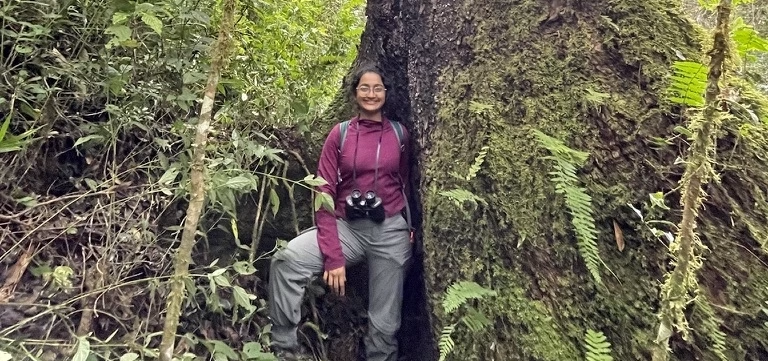

Traditional Knowledge and Wildlife Perceptions: Graduate researchers Pietro Cafarelli (MSc student, University of Parma) and Marie Jeanne Razafiarivony (University of Antananarivo) conducted a two-month field study in the villages surrounding the La Mananara forest, interviewing nearly 200 local residents about their personal and family narratives, beliefs, and practices related to wildlife. This research is critically important, as it documents and integrates traditional ecological knowledge—ensuring that Wildlife Madagascar’s conservation strategies remain respectful, effective, and culturally grounded. This project is currently being replicated, using the same methods, in the villages adjacent to ASSR, led by Alessio Anania, a Visiting Research Fellow from Oxford Brookes University.
Partnership Research

BIOCOMP Project: Consequences of Global Biodiversity Loss and Climate Change for Decomposer Communities and Implications for Forest Carbon Fluxes—based at La Mananara, examines how biodiversity loss and climate change influence decomposer communities and alter forest carbon cycling, providing crucial data to understand how Madagascar’s forests contribute to global carbon stability. This project is done in partnership with Dresden University, and is being coordinated by Dr. Jacques Rakotondranary, Wildlife Madagascar’s La Mananara Program Manager, and assisted by Maholy Andrianaivoravelona, a student researcher from the University of Antananarivo.
Lemur Conservation Consortium: Wildlife Madagascar further strengthened its scientific partnerships through an MOU with the Wildlife Conservation Society (WCS) and the Lemur Conservation Foundation (LCF), aligning research, conservation, and ecotourism priorities across Anjanaharibe-Sud Special Reserve, Marojejy National Park, and Makira National Park to amplify the collective impact for Madagascar’s biodiversity.
Undergraduate Research Projects
This summer, we welcomed five students from the School for International Training (SIT) who conducted projects at La Mananara and ASSR. SIT, a long-established international education program operating in Madagascar since the late 1980s, focuses on biodiversity, conservation, and natural resource management, providing students with hands-on field experience in community-based research.

- Chameleon Microhabitat Selection: Sophia Roberts (Barnard College) explored how UV exposure influences microhabitat selection in globe-horned (Calumma globifer) and blue-legged (Calumma crypticum) chameleons at La Mananara. Her work sheds light on how deforestation and habitat degradation alter sunlight patterns – key factors shaping chameleon behavior and conservation strategies.
- Fern Diversity: Ceci Blexrud (University of Vermont) studied fern diversity and climate change at Anjanaharibe-Sud Special Reserve (ASSR), comparing warmer lowland forests to cooler high-altitude habitats to understand how rising temperatures may drive species range shifts.
- Flowering Patterns and Flora Diversity: Natalie Dresdner (Oberlin College) conducted an inventory of flora diversity and forest structure at Anjanaharibe-Sud Special Reserve (ASSR). Her research explored whether flowering strategies change with elevation, contributing to our understanding of pollinator communities and their role in sustaining ecosystem resilience.
- Seed Dispersal: Ellen Lansing (Columbia University) investigated lemur-mediated seed dispersal at La Mananara by analyzing seeds found in lemur feces, offering critical insights into how these primates contribute to forest regeneration—one seed at a time.
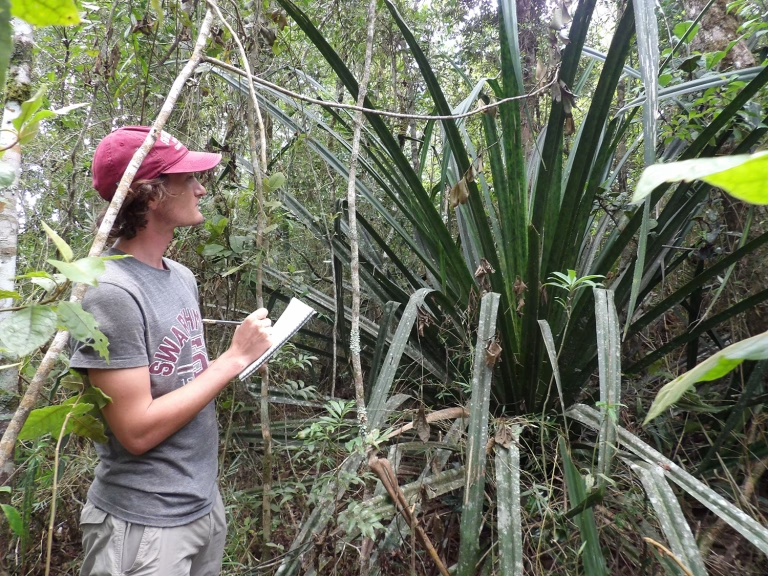
Forest Regeneration: Cohen Manges (Swarthmore College) examined forest regeneration following wildfires near La Mananara, comparing plant diversity in burned versus unburned areas to better understand how Madagascar’s forests recover after disturbance.

In addition to international students, Wildlife Madagascar was proud to host 12 Malagasy undergraduate students from the University of Vakinankaratra (Antsirabe, Madagascar) who learned research methodology in the field at La Mananara under Dr. Antsonantenainarivony “Goum” Ononamandimby. They discovered how to conduct botanical plots, take herbarium specimens, inventory orchids, collect seeds for germination and propagation studies in our nursery, and establish phenology trails for monitoring tree reproductive cycles. These critical botanical projects are helping us build baseline data for long-term monitoring and will play a key role in supporting future reforestation efforts in La Mananara’s highland rainforest. These collaborations build local scientific capacity and ensure that conservation research is increasingly led by Malagasy scholars dedicated to protecting their country’s natural heritage.
Wildlife Madagascar Research Projects
Chameleon Research
Through generous grants from the Mohamed bin Zayed Species Conservation Fund, Wildlife Madagascar commenced the first comprehensive surveys of the Critically Endangered Namoroka leaf chameleon (Brookesia bonsi) and the Endangered globe-horned chameleon (Calumma globifer). These projects are being carried out by Masoandro Andrianirina at Namoroka and Henri Raherinjatovo at La Mananara. The studies are generating critical data on these species’ potentially narrow ecological requirements, greatly enhancing our ability to safeguard these extraordinary creatures. And, thanks to an additional grant from Re:wild, we will expand our Namoroka leaf chameleon work by surveying new sites within and around the national park in 2026.

Bamboo Lemur Habituation
With generous support from an anonymous donor, Wildlife Madagascar launched a bamboo lemur habituation program under the leadership of Joany Nambinina, enabling long-term behavioral ecology studies and future ecotourism opportunities.

Fruit Bat Feeding Ecology
A new fruit bat research initiative overseen by Caren Rasoarimanana, began this year with funding from the Mohamed bin Zayed Species Conservation Fund. This year-long study at Tsingy de Namoroka National Park examines the feeding ecology of three fruit bat species, including the Madagascan flying fox (Pteropus rufus). The team is evaluating seasonal diets, collecting fruit seeds from guano, and conducting germination trials at our nursery at Madagascar Classic Collection’s Namoroka Tsingy Camp to assess each species’ role as a seed disperser. The results will guide reforestation planning and protect critical roosting habitats. Wildlife Madagascar is collaborating with Dr. Steve Goodman of the Field Museum of Natural History in Chicago and the Malagasy NGO, Association Vahatra, who provided specialized training for our team in Namoroka.
Hairy-Eared Dwarf Lemur Behavioral Ecology: Delaïd Rasamisoa, Wildlife Madagascar’s Conservation Program Manager at ASSR, is leading a year-long study on the behavioral ecology of the hairy-eared dwarf lemur (Allocebus trichotis), one of Madagascar’s most elusive and understudied primates. Supported by a grant from Re:wild, this research focuses on nocturnal tracking to document dietary habits, movement patterns, and microhabitat preferences of this Endangered species, which occurs at unusually high density within the park. The findings will provide essential baseline data to inform targeted conservation strategies and guide long-term efforts to ensure the species’ survival within its shrinking forest range.
Red Ruffed Lemur Distribution
Due to the ongoing generosity of Apenheul Primate Conservation Trust, we continue to work on determining whether the Critically Endangered red ruffed lemur (Varecia rubra) is present within ASSR. To facilitate this work, Apenheul is funding the creation of another field station in the park.
Socio-economic Research
In partnership with Full Forests, led by Dr. Cortni Borgerson, Wildlife Madagascar completed an extensive socioeconomic and children’s health assessment at Tsingy de Namoroka National Park. At Namoroka, more than 2,700 household interviews were conducted within a three-kilometer radius of the park, gathering data on demographics, agriculture, and seasonal income. The same assessments were also carried out in communities around La Mananara, led by our student researchers, Haingo Andriamiakajato and Emma Rasoarimalala, from the University of Antananarivo, who received training on data collection methods from Dr. Borgerson. These studies illuminate community needs, inform livelihood programs, and establish essential baselines for evaluating the long-term impact of our conservation initiatives.

Tortoise Research
Wildlife Madagascar research student, Safidy Andrianelson, joined two veterinarian students with the NGO Women Rise Wildlife Research to investigate the diversity and density of internal parasites infecting both wild and captive radiated tortoises (Astrochelys radiata), a Critically Endangered tortoise endemic to the spiny desert of southwest Madagascar. This work, which also incorporates data collection from the Turtle Survival Alliance (TSA) center in Lavavolo, and will ultimately help expand our understanding of the role endoparasites play in tortoise health and inform future conservation efforts.
Publications
- Eppley TM (2025) Lemurs on the Edge. In: Strier KB (ed.), Primate Ethnographies: Fieldwork from Across the Globe, 2nd Edition, pp. 112-124. Routledge, New York.
- Borgerson C, Kling KJ, Wuchter A, Pascal E, Paschalis EM, Razafindrapaoly BN, Eppley TM (2026) How economic choices affect livelihoods in Madagascar’s park-adjacent communities and what it means for conservation and development. Environmental Development 57: 101357. https://doi.org/10.1016/j.envdev.2025.101357
- Anania A, Besnard F, Rasamisoa CD, Andriantsitoherina E, Mosa JF, Campera M, Phelps M, Balestri M, Gibson D, Eppley TM, Donati G (2025) Unshrouding narratives, beliefs, and practices related to the aye-aye (Daubentonia madagascariensis) in eastern Madagascar. International Journal of Primatology. https://doi.org/10.1007/s10764-025-00515-0
- Torres-Romero EJ, Eppley TM, Ripple WJ, Newsome TM, Krofel M, Carter NH, Ordiz A, de Oliveira TG, Selva N, Penteriani V (2025) Global scale assessment of the human-induced extinction crisis of the terrestrial carnivores. Science Advances 11: eadq2853. https://doi.org/10.1126/sciadv.adq2853
- Cardinal C, Eppley TM, Andriamorasata M, Donati G (2025) Exploring the effects of anthropogenic habitat change on Euplerid carnivore occupancy in a humid evergreen forest, south-east Madagascar. Journal of Zoology 327: 84-97. https://doi.org/10.1111/jzo.70037
- Borgerson C, Razafindrapaoly BN, Rasolofoniaina BJR, Andriamahaihavana A, Ravololoniaina FL, Owen MA, Eppley TM (2025) Wildlife consumption patterns during a complex humanitarian and environmental crisis. Biological Conservation 306: 1111106. https://doi.org/10.1016/j.biocon.2025.111106
- Devarajan K, Fidino M, Farris ZJ, Adalsteinsson SA, Andrade-Ponce G, … Eppley TM, … Gerber BD (2025) When the wild things are: Defining mammalian diel activity and plasticity. Science Advances 11(9): eado3843. https://www.science.org/doi/10.1126/sciadv.ado3843
EDUCATION AND AGRICULTURAL TRAINING
This year marked the formal launch of Wildlife Madagascar’s Education Program, made possible through the vision and generosity of the Duval Family. Education is at the heart of the mission—building empathy for wildlife and inspiring the next generation of conservation advocates and leaders. Education Specialists, Rota Andriantsoa at La Mananara and Vanessa Olinda at ASSR, and Assistant Manager Falina Razafimamonjy, work with local schools to deliver engaging lessons, distribute classroom materials, and coordinate field visits that connect students to the forests around them and introduce them to lemurs for the first time. They also organize community celebrations for International Chameleon Day and World Lemur Day.


With the creation of its education program, Wildlife Madagascar became an institutional member of the International Zoo Educators Association (IZE), a global organization dedicated to advancing conservation education through collaboration, professional development, and the exchange of ideas among zoo and aquarium educators worldwide. Rota Andriantsoa, Vanessa Olinda, and Falina Razafimamonjy are all active IZE members, connecting Wildlife Madagascar’s education team to an international community devoted to inspiring people to care about and act for wildlife and the environment. Ms. Razafimamonjy was selected as a participant in IZE’s Emerging Leaders Mentorship Program, which will culminate in her project presentation at the association’s biannual conference in 2026.

Community Gardens
Wildlife Madagascar introduced Community Gardens at each field site through support from the Abraham Foundation. These gardens, established in areas chosen by each community, teach sustainable farming techniques while providing dietary diversity and protein for children, ultimately improving food security. In regions where economic hardship often limits access to education, these projects provide both nourishment and knowledge—empowering communities to thrive alongside the ecosystems they protect.
Internship Program
Wildlife Madagascar’s Internship Program expanded in 2025 to include placements at both La Mananara and Tsingy de Namoroka National Park, providing hands-on opportunities for students to engage in conservation, education, and ecotourism. At La Mananara, intern Apollo Gettleman supported community-based conservation efforts by updating camera traps, assisting with lemur data collection, expanding the native plant nursery, seeding the community garden, and removing invasive species. At Namoroka, Jillian Bolton and Danielle Freeberg from the San Diego State University Payne School of Hospitality and Tourism completed the first Hospitality and Conservation Education Internship, gaining field experience in sustainable tourism, reforestation, and environmental education while training at Namoroka Tsingy Camp, operated by partner Madagascar Classic Collection. These internships reflect Wildlife Madagascar’s growing investment in global learning exchanges and its commitment to mentoring the next generation of conservation and hospitality professionals.
We were also fortunate to be joined by student volunteers Floortje Middag (The Netherlands) at La Mananara, and Leo Lahijani (UC Davis, U.S.) and Charlotte Dijks (The Netherlands) at ASSR.

Invasive Species Awareness Poster
Wildlife Madagascar’s education efforts also expanded to address invasive species threatening Madagascar’s forests. Creative Director Akane Hatai designed a powerful poster titled “An Invader in the Forest,” highlighting the dangers of silverleaf desmodium (Desmodium uncinatum)-an invasive plant that impedes native plant growth by blanketing the forest floor with dense, sticky foliage and whose hook-covered leaves and seed pods can trap small animals such as chameleons, frogs, and insects. The poster, made possible by the generosity of Dr. Michael Nash and the Chameleon Academy, is being shared with local schools throughout eastern Madagascar. The objective is to educate students about this threat and inspire them to help remove the plant from their villages and nearby forests, protecting the native species that depend on these habitats.

Sakondry Farming
A key addition to Wildlife Madagascar’s agricultural training efforts this year was the launch of Sakondry Farming Training. This program is led by Aro Andriamanalina, and made possible by a grant from the Taronga Conservation Society Australia. Sakondry – an indigenous, protein-rich edible insect – offers a climate-smart, low-impact food source that reduces pressure on wildlife. The training equips families with practical methods for rearing and harvesting sakondry, creating pathways for improved nutrition, supplemental income, and decreased reliance on bushmeat, while reinforcing community stewardship of local habitats.
ECOTOURISM

Wildlife Madagascar’s partnerships in ecotourism flourished in 2025. We signed MOUs with The Great Projects and Rewild Safaris, who will bring international volunteers and travelers to Madagascar beginning May 2026. The Great Projects specializes in ethical volunteer expeditions that support community-based conservation, while Rewild Safaris creates immersive, conservation-focused travel experiences that will bring guests to multiple field sites – including La Mananara, Anjanaharibe-Sud Special Reserve (ASSR), and Tsingy de Namoroka National Park – connecting them directly to the work being done to protect Madagascar’s wildlife and habitats. A portion of the proceeds from each program will be donated to support Wildlife Madagascar’s conservation efforts.
To prepare for the volunteers, infrastructure development also advanced thanks to the Mills Family, which supported the remodeling of the Conservation Field Station—adding bedrooms, a kitchen, a combined dining room and workspace, and a bathroom to accommodate growing field and volunteer teams. The Great Projects also generously funded the construction of volunteer bungalows at La Mananara, creating comfortable, sustainable housing for participants contributing to conservation and education work.

These investments strengthen Wildlife Madagascar’s ability to host volunteers, researchers, and educators while creating meaningful economic opportunities for surrounding communities.
GLOBAL OUTREACH
Wildlife Madagascar’s global presence grew dramatically in 2025 through a variety of marketing and communications initiatives.

International Chameleon Day: Established in 2024 by Wildlife Madagascar, this celebration expanded to more than 50 partners worldwide, with events, primary and middle school educational materials available in English, French, and Malagasy, and social-media engagement including a podcast featuring our Chief Conservation Officer Dr. Tim Eppley reaching tens of thousands.

Journalism: Engaged Edges of Earth, who filmed and interviewed the Wildlife Madagascar teams at all three field sites. Our video segment premiered during Climate Week NYC, shining a global spotlight on our Malagasy-led conservation work.
Licensing: Established a partnership with Licensed Right International. In 2026, we will see the launch of custom Wildlife Madagascar socks, shoes, plush, and more—spreading our message and supporting our conservation work in creative new ways.
Long Live Lemurs campaign: Developed pro bono by Greenhaus and Pixel Farm, the campaign celebrates Madagascar’s extraordinary primates and raises awareness of their plight as the world’s most endangered group of mammals. Mighty Media Shop developed and placed the media plan pro bono.

Membership: Reached the 700-member mark, a 40% increase in membership over last year.
Photography: Received breathtaking high-resolution photography of our lemurs and our ecotourism and field work at Namoroka and La Mananara from Robert J. Ross, who donated his time and talent.


Presentations: Chief Conservation Officer Dr. Tim Eppley gave public and staff presentations on his book Lemurs of Madagascar at Brevard Zoo, Central Florida Zoo, Jacksonville Zoo, and Palm Beach Zoo. Wildlife Madagascar also participated in the 30th International Primatological Society Congress, where the organization hosted a booth and 14 team members took part – seven delivering oral presentations and seven presenting posters – with Dr. Eppley playing a key role on the Local Organizing Committee. In addition, Dr. Eppley gave guest lectures and seminars at Eckerd College, Oxford Brookes University, The Ohio State University, University of Nebraska – Lincoln, and Utrecht University.

Social Media: Surpassed 99,000 followers on Facebook, growing an engaged community that believes in our mission. We also launched our YouTube channel.
Wildlife Conservation Network Expo: Selected as an Expo exhibitor, where we shared our work with conservation leaders and supporters from around the world.

STRATEGY
In 2025, Wildlife Madagascar completed its Reforestation Strategy and Education Strategies, defining clear five-year pathways to achieve the organization’s ten-year vision of creating a future where people and wildlife thrive together.
Education Strategy
The Education Strategy outlines a holistic framework to inspire conservation values and empower both children and adults across Madagascar. It focuses on building environmental awareness, empathy for wildlife, and sustainable resource practices through classroom programs, community outreach, and teacher training. The plan also includes expanding International Chameleon Day, developing curriculum materials in Malagasy and French, and integrating environmental education into local schools. For adults, the strategy emphasizes sakondry farming and agricultural training to promote food security and reduce reliance on forest resources. Together, these efforts create lasting connections between people and nature—ensuring that conservation is not only understood but embraced by the next generation.
Reforestation Strategy
Wildlife Madagascar’s reforestation strategy focuses on the restoration of native forests at our three field sites—La Mananara, Anjanaharibe-Sud Special Reserve, and Namoroka – by operating community-led nurseries that grow native tree species vital to both wildlife and people. Seeds are collected from the forest floor and from lemur and fruit bat feces, which improves germination success. Once germinated, seedlings are hardened, transplanted, and carefully tended through selective weeding, protection with guards and wire cages, and ongoing maintenance to ensure long-term survival. These efforts reconnect fragmented habitats through the creation of forest corridors that allow wildlife to move safely between areas. The program also provides training and employment for local residents, linking forest restoration with community prosperity. Progress is measured through seedling survival and canopy growth in the early phase, followed by tree diversity, wildlife use of corridors, and socioeconomic benefits such as increased local income and food security.
THE ROAD FORWARD

2025 was truly a Year of Growth and Guardianship. Across Madagascar, new seedlings are taking root, patrols are protecting forests, students are learning to value wildlife, and communities are building more secure futures.
With every tree planted, every child taught, and every partnership forged, Wildlife Madagascar moves closer to a future where wildlife and people thrive together. This progress is made possible through the steadfast commitment of its members, donors, and partners – whose belief in this mission ensures that Madagascar’s forests stand tall, its species endure, and its communities prosper for generations to come.
The road ahead is filled with promise. In 2026, Wildlife Madagascar will expand its reach with the establishment of a fourth field site in the spiny forest of southern Madagascar, launch a fully operational volunteer program at La Mananara, establish a new field camp at Anjanaharibe-Sud Special Reserve (ASSR), and expand the agricultural training program that strengthens community livelihoods. Together, these initiatives will deepen conservation impact while creating opportunities for people and wildlife to flourish side by side.