

Wildlife Madagascar Field Site: Angavo-Mandrare Landscape
- Location: Androy Region, southern Madagascar
- Management category: IUCN Category V protected area; private land
- Current Management: Turtle Survival Alliance; private landholders
- Site size: ~880 square kilometers (339.8 square miles)
The Angavo-Mandrare Landscape is a mix of formally protected areas and private lands located in southern Madagascar. The protected area of Angavo is newly established and formally managed by our partner, the Turtle Survival Alliance (TSA). The lands between Angavo and the western banks of the Mandrare River (until the boundary of Ifotaka-Nord) are unprotected and owned by private landholders. Combined, this expansive landscape encompasses approximately 880 square kilometers (340 square miles). This landscape contains some of the last remaining spiny forest, a xerophytic, drought-adapted ecoregion confined to southern Madagascar. The area is incredibly remote, with relatively few tourists venturing into this exceptional yet unforgiving landscape.
Biodiversity in Angavo-Mandrare
Angavo-Mandrare hosts six species of lemurs, most notably the Critically Endangered Verreaux’s sifaka (Propithecus verreauxi) and the Endangered ring-tailed lemur (Lemur catta). Species are not limited to protected area boundaries but occur throughout the fragmented landscape and are often found within remnant spiny forest patches on private land.
- Verreaux’s sifaka (Propithecus verreauxi) Critically Endangered
- Ring-tailed lemur (Lemur catta) Endangered
- Petter’s sportive lemur (Lepilemur petteri) Endangered
- Aye-aye (Daubentonia madagascariensis) Endangered
- Grey mouse lemur (Microcebus griseus) Least Concern
- Grey-brown mouse lemur (Microcebus griseorufus) Least Concern
- Fat-tailed dwarf lemur (Cheirogaleus sp.) NA
 Verreaux’s sifaka
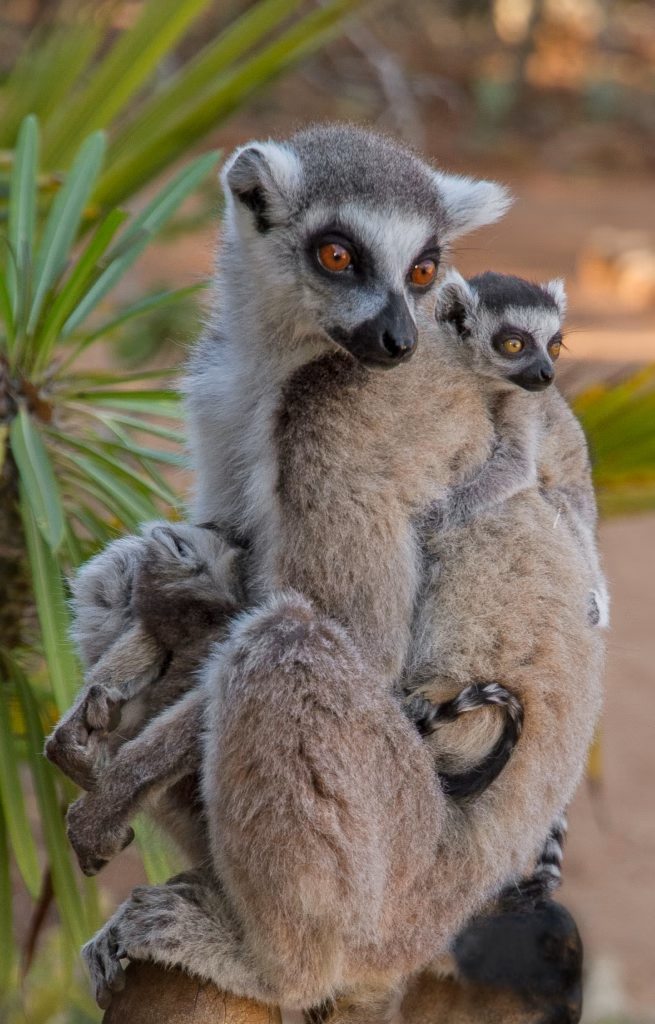 Ring-tailed lemur
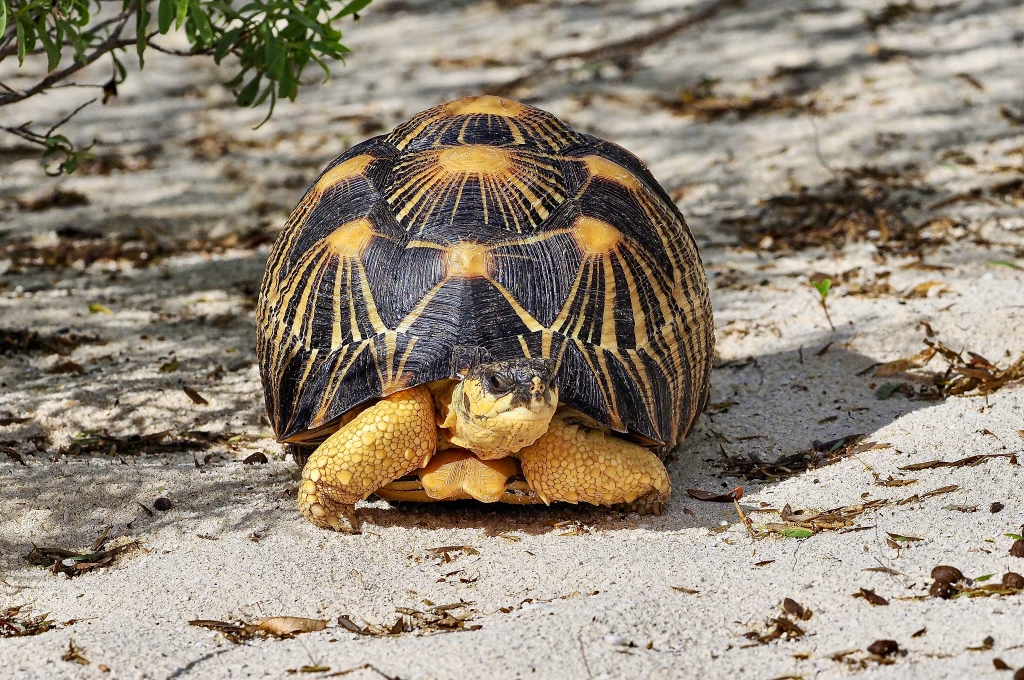 Radiated tortoise
Species inventories have recorded relatively low faunal richness compared to other regions of Madagascar, including 3 species of amphibians, 23 species of reptiles, 56 species of birds, and 16 species of mammals, including lemurs. Non-lemur fauna of potential high interest to tourists includes radiated tortoise (Astrochelys radiata), spider tortoise (Pyxis arachnoides), crested coua (Coua cristata), giant coua (Coua gigas), running coua (Coua cursor), and white-browed owl (Athene superciliaris).

Botanically, the Angavo-Mandrare landscape supports a distinctive flora that is characteristic of spiny forest habitat and is structurally dominated by Didiereaceae, baobabs (genus Adansonia), and spiny Euphorbia. To date, 57 botanical species representing 35 families have been recorded. Of those, 52 (91%) are endemic to Madagascar. Despite the seemingly low diversity, the area requires more extensive inventories across the broader landscape, especially within the interior of the newly protected Angavo area. Highlights include the fony baobab (Adansonia rubrostipa) with its distinctive reddish bark and za baobab (Adansonia za), both of which present exceptional photography opportunities, particularly in the early morning or late afternoon light. Other highlights include the Madagascar ocotillo or “octopus trees” (Alluaudia spp.), which can grow an impressive 18 meters tall and contribute to the otherworldly appearance of the landscape. Ecologically, the spiny forest is critical for maintaining regional hydrological stability, preventing desertification, storing carbon in woody biomass, and preserving one of the world’s most evolutionarily distinctive dry forest systems.
Current Threats Facing Angavo-Mandrare Landscape
Assessments conducted by the International Union for Conservation of Nature (IUCN) Red List demonstrate that overexploitation in conjunction with unsustainable agricultural practices affect 62.1% and 56.8% of vertebrate species, respectively. They also show these practices affect nearly 90% of all Madagascar’s plant species. The primary threats to the Angavo-Mandrare Landscape include:
- Hunting for food and wildlife trafficking
- Shifting agriculture (slash-and-burn)
- Selective logging
- Collection of secondary forest products (traditional medicine)
- Domestic livestock grazing on natural vegetation
- Uncontrolled fires associated with traditional grazing and tavy practices
- Invasive animal species (feral dogs and cats, Indian civet, and black rats)
Strengthening the management of remaining natural forests, both within existing protected areas and on private land, is essential for long-term conservation success. The development of alternative livelihood initiatives, including agricultural training, green charcoal production, and entrepreneurial support, can help reduce pressure on remaining habitats and wildlife while improving local economic resilience.