
Brookesia superciliaris
lEAST CONCERN
 ©lemurtaquin
 ©Randy Harwood
 ©dschok
STATUS
Least Concern
SIZE
3.3 to 3.5 in (8.5 to 9.5 cm)
HABITAT
Humid forest
DIET
Insects
LIFESTYLE
Diurnal
Terrestrial and arboreal
THREATS
Deforestation
Habitat fragmentation
Climate change
Pet trade

INTERESTING FACTS
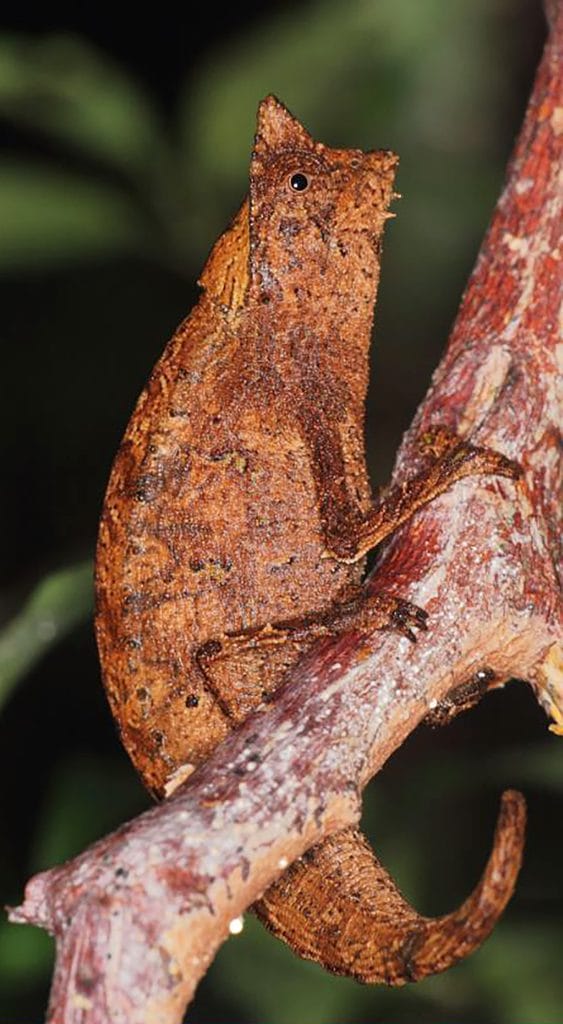
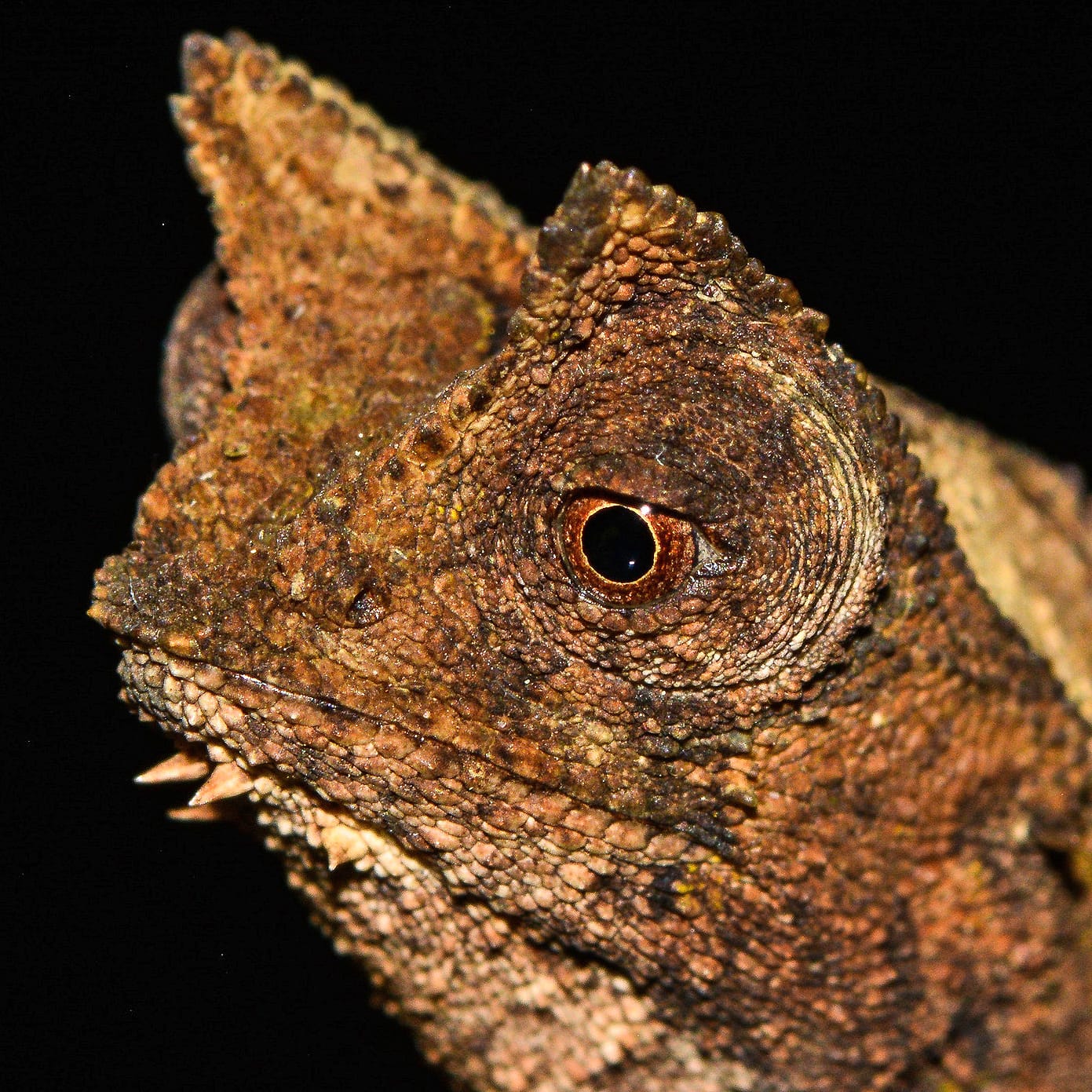
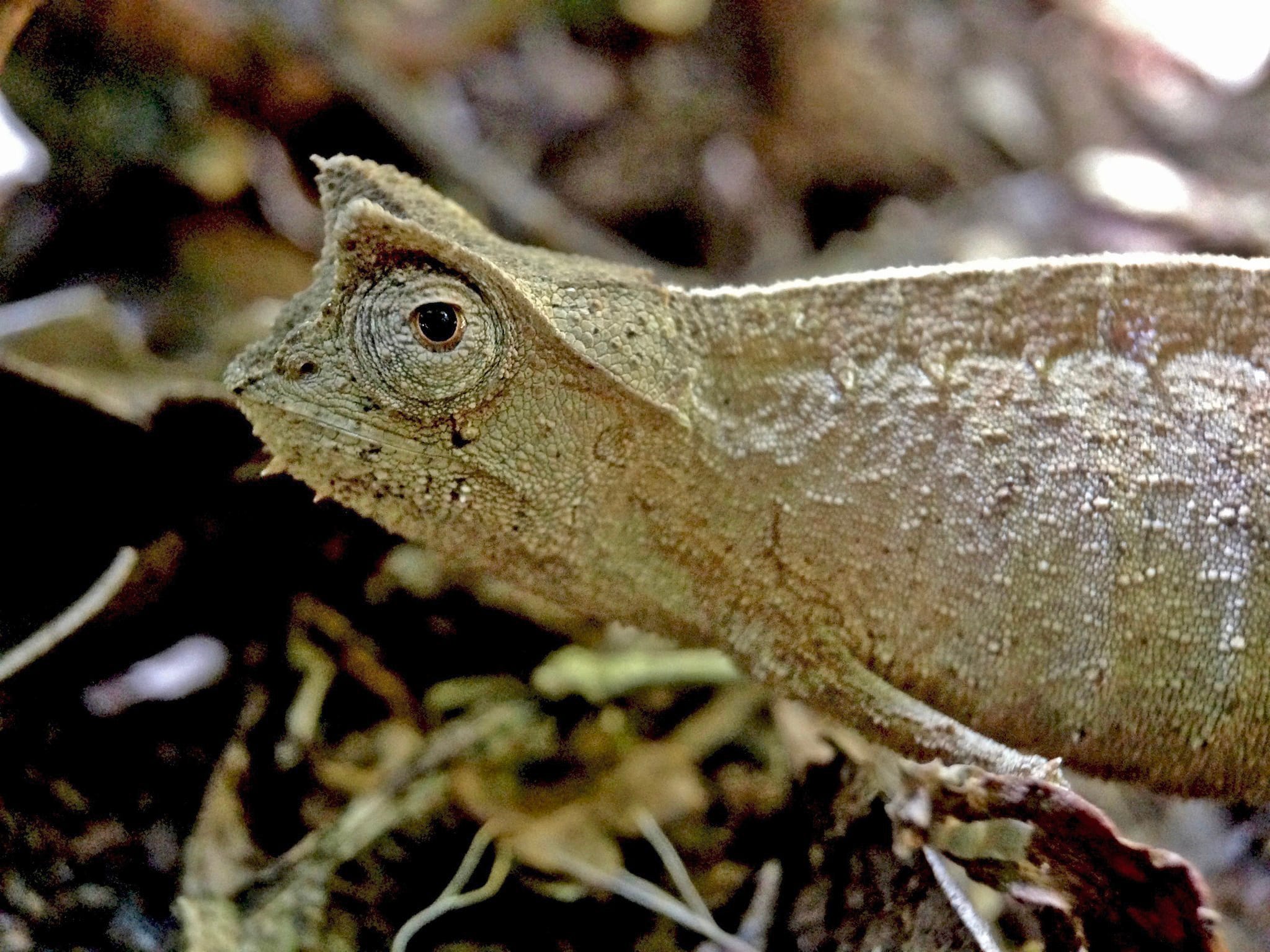
This species is named for the conspicuous bony projections above the eyes—the Latin word supercilium means “eyebrow.”
It may be only about three inches long, but it is one of the largest of the leaf chameleons.
Leaf chameleons are typically found on the ground, but the brown leaf chameleon is one of only a few that also climbs into brush and small trees.
Characteristics
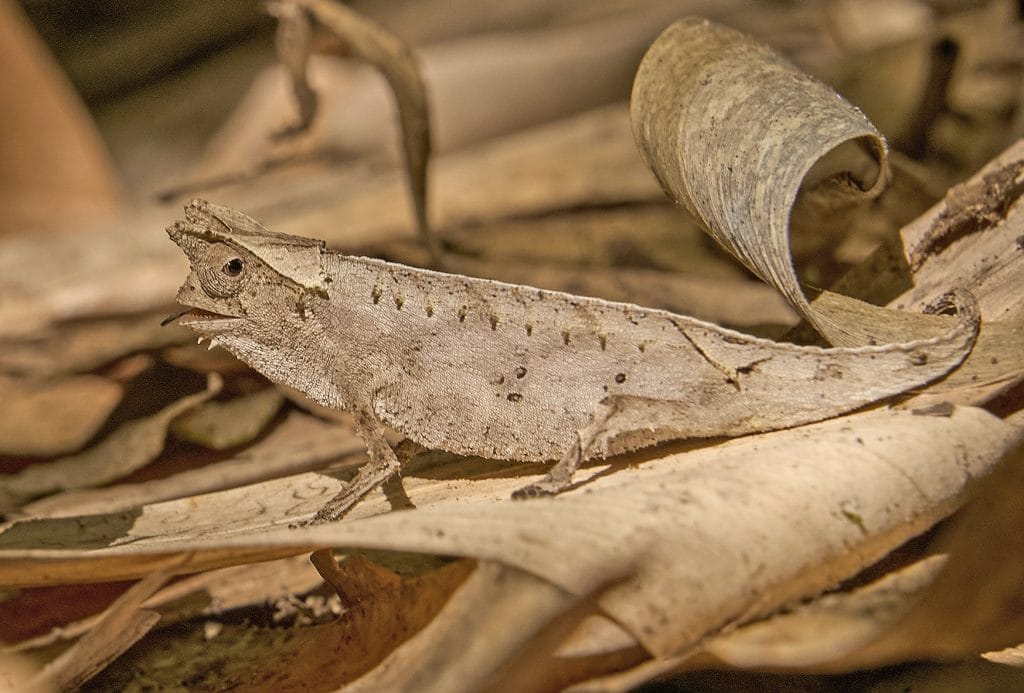
Among Madagascar’s extraordinary dwarf and leaf chameleons, the brown leaf chameleon occupies an interesting middle ground: large enough to stand out within the genus, yet highly camouflaged compared to the more familiar arboreal chameleons of genera such as Calumma and Furcifer. This species is one of the larger members of Brookesia and is a highly specialized forest-floor micro-predator with characteristics that reflect adaptation to terrestrial living.

©asanoth
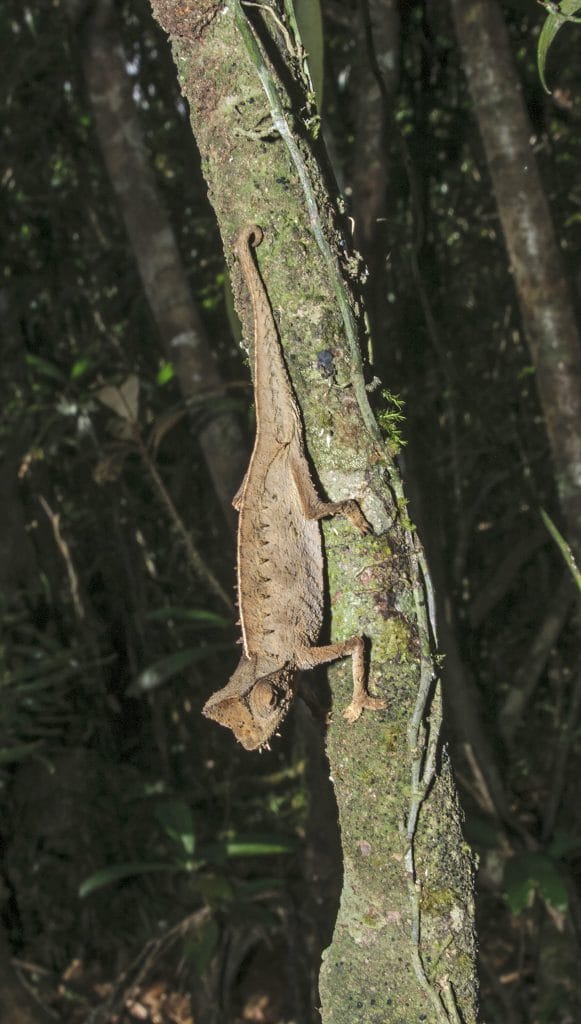
The body is laterally compressed, giving it a compact, leaf-like silhouette. Coloration is typically composed of muted browns, tans, reddish earth tones, mossy greens, and charcoal striping, often with irregular patterning that mimics decaying leaves and forest debris. Unlike the color displays of larger chameleons, the brown leaf chameleon relies on camouflage. Color change is present but relatively subtle, and it is generally tied to thermoregulation, stress, or nocturnal resting coloration.
©Margaret Stevens
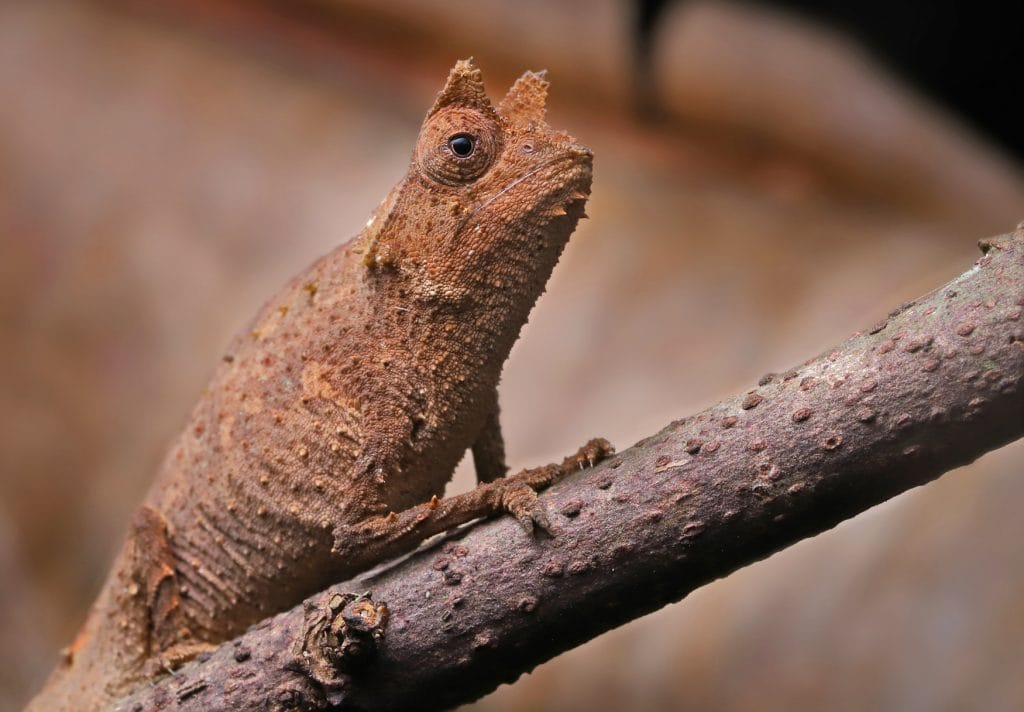
One of the species’ defining features is the pronounced structure on the head, called the supraocular ridge, which gives the appearance of raised “eyebrows”—and contributes to its perpetually “stern” expression. The tail is relatively short and only weakly prehensile—a major departure from arboreal chameleons. In fact, Brookesia species demonstrate a fascinating evolutionary shift away from canopy specialization, with reduced tails and locomotor adaptations more suited to walking through leaf litter than balancing on narrow branches.
The eyes are unmistakably chameleon, with independently mobile turrets capable of scanning the environment with remarkable precision. However, visual targeting distances are shorter due to the species’ terrestrial lifestyle. How they move also differs subtly from arboreal relatives: the gait is deliberate and almost insect-like, optimized for navigating uneven substrates rather than vertical climbing.
 ©Margaret Stevens
Habitat
The brown leaf chameleon inhabits the humid and subhumid forests of eastern Madagascar, particularly in rainforest systems rich in leaf litter, with stable humidity and dense understory. It depends on intact forest floor microhabitats, where layers of decomposing vegetation create both camouflage opportunities and abundant invertebrates as prey.
Microhabitat quality is especially important. Moisture retention, canopy cover, litter depth, and fungal decomposition all influence prey availability and temperature. Compared to larger arboreal chameleons capable of moving across fragmented habitats, Brookesia species are often far more sensitive to subtle environmental changes.
 ©gauvain_saucy
Diet
As with most leaf chameleons, this species is a highly specialized predator. Its diet consists primarily of tiny terrestrial invertebrates, including springtails, ants, small beetles, mites, spiders, fly larvae, and isopods. This species plays a critical role within Madagascar’s rainforest floor ecosystems, functioning as a regulator of leaf-litter invertebrates.
This chameleon’s feeding behavior is different from larger arboreal species that target comparatively large prey from elevated perches. The brown leaf chameleon’s tongue projection distances are shorter, reflecting both its smaller size and the complexity of the habitat. On the forest floor, precision matters more than range. Many feeding strikes occur at extremely close distances, often after prolonged visual tracking. Like other chameleons, this species relies heavily on stereoscopic vision to locate prey, though prey detection frequently occurs within cluttered, low-light environments.
Behavior
Brown leaf chameleons are primarily diurnal, spending daylight hours slowly moving through leaf litter, low vegetation, roots, and fallen branches in search of prey. Unlike highly territorial canopy species that rely heavily on visual displays, this chameleon is comparatively understated, depending first and foremost on remaining undetected.
 @Bobby-Bok
Its locomotion is cautious, rocking, and almost mechanical. Individuals frequently sway while moving, enhancing their resemblance to dead leaves shifting in the breeze. This anti-predator strategy is particularly effective against visually oriented predators such as birds and snakes. When threatened, this chameleon often freezes completely rather than fleeing, relying on disruptive camouflage to break up its outline.
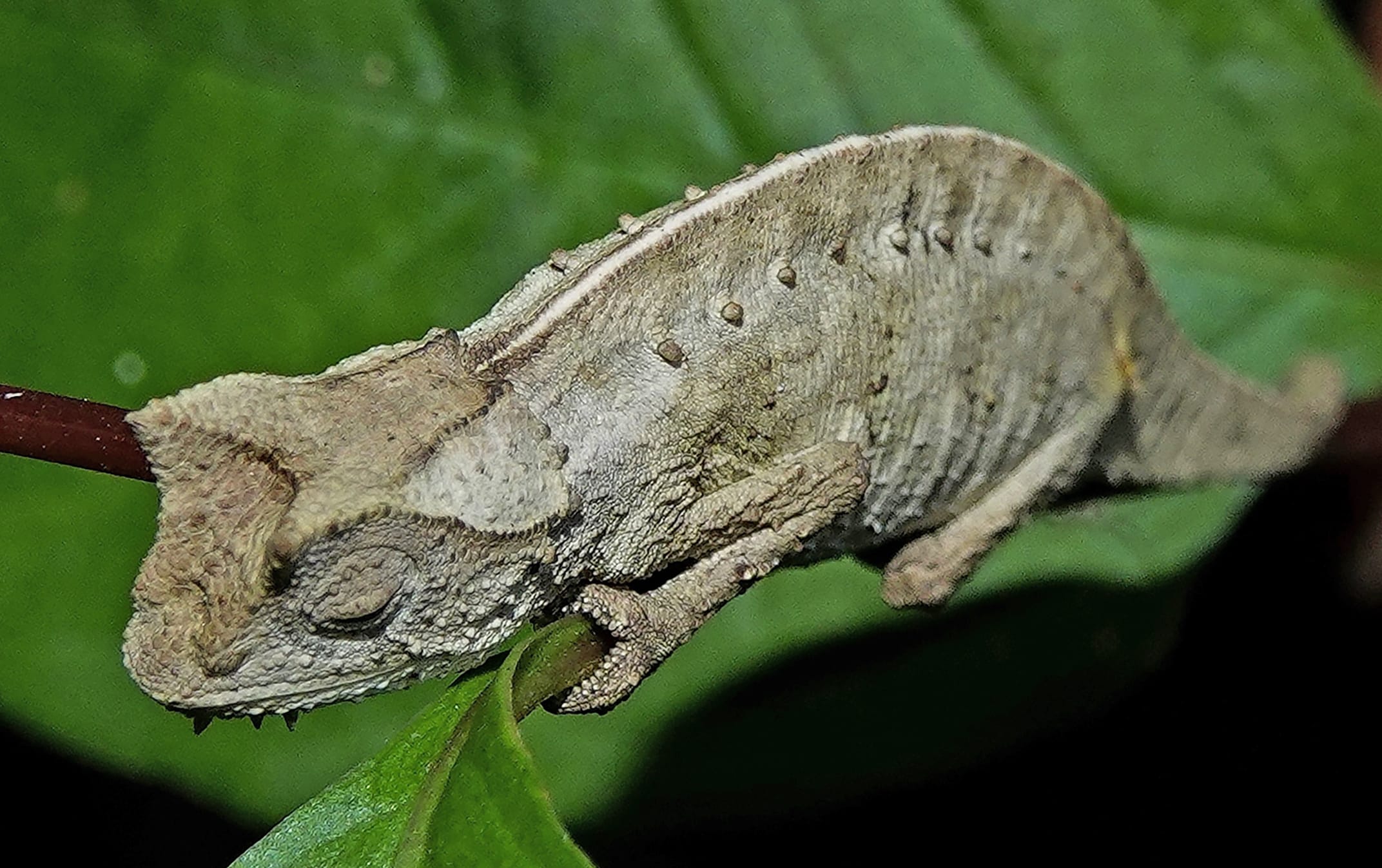
At night, individuals typically climb up into low vegetation, twigs, or saplings to sleep. Like many chameleons, they become noticeably paler while sleeping, likely reflecting changes in physiological state and thermoregulation. Roost-site selection appears highly intentional, balancing predator avoidance with microclimatic stability.
Males may engage in subtle territorial interactions involving lateral compression, body inflation, and muted coloration shifts. Direct combat is uncommon and usually brief. Compared to canopy species with broad visual communication repertoires, Brookesia interactions tend to be more subtle and less dramatic.
 ©greatest_auk
Reproduction and Life Cycle
Reproductive biology in this species remains less documented than in larger chameleons, but available observations suggest a classic small-bodied terrestrial chameleon strategy. Females produce relatively small clutches—typically only a few eggs at a time—which are deposited in shallow nests within moist soil or protected leaf litter. Given the humid environmental conditions, incubation depends heavily on stable moisture and temperature. Hatchlings emerge as fully independent, miniature replicas of the adults, already equipped with camouflaging coloration and instinctive hunting behaviors. Juvenile mortality is likely extremely high, as tiny terrestrial reptiles face intense predation pressure from arthropods, birds, snakes, and small mammals.
Lifespan is thought to be short compared to giant canopy chameleons, although exact longevity data remain limited. Daily activity revolves around balancing thermal regulation, hydration, predator avoidance, and energy-efficient foraging within a structurally complex environment.
 ©timboyok
Conservation and Threats
Although the brown leaf chameleon is listen as Least Concern and remains more widespread in Madagascar than some chameleons, it is still vulnerable to the ecological pressures affecting Madagascar’s eastern rainforests. The species faces ongoing threats from deforestation, logging, habitat fragmentation, climate-driven microclimate changes, and collection for the reptile trade.
For terrestrial leaf chameleons, even seemingly minor habitat disturbances can have serious impacts. Removal of canopy cover alters humidity, temperature stability, and litter composition, effectively dismantling the microhabitats these animals depend on. Unlike larger generalist chameleons, Brookesia species often lack the ecological flexibility to persist in heavily degraded environments.
Conservation of the brown leaf chameleon depends less on species-specific management and more on preserving intact rainforest ecosystems and the delicate microclimatic processes that sustain them. Continued field surveys, taxonomic work, and microhabitat studies are also essential, as Madagascar’s leaf chameleon diversity remains incompletely understood.