
Astrochelys radiata
CRITICALLY ENDANGERED


STATUS
Critically Endangered
SIZE
Shell length: 12 to 16 in (30 to 40 cm)
Weight: about 35 lbs (15 to 16 kg)
HABITAT
Dry forest
Thorny scrubland
Spiny desert
DIET
Grasses
Succulents
Flowers and fruit
Cactus
LIFESTYLE
Diurnal
Terrestrial
THREATS
Illegal wildlife trade
Habitat loss
Climate change

INTERESTING FACTS
These tortoises are tough, living in dry, spiny forest and desert.
Radiated tortoises have beautiful golden markings on their shell, but this feature has made their subject to collection for the pet trade.
Characteristics
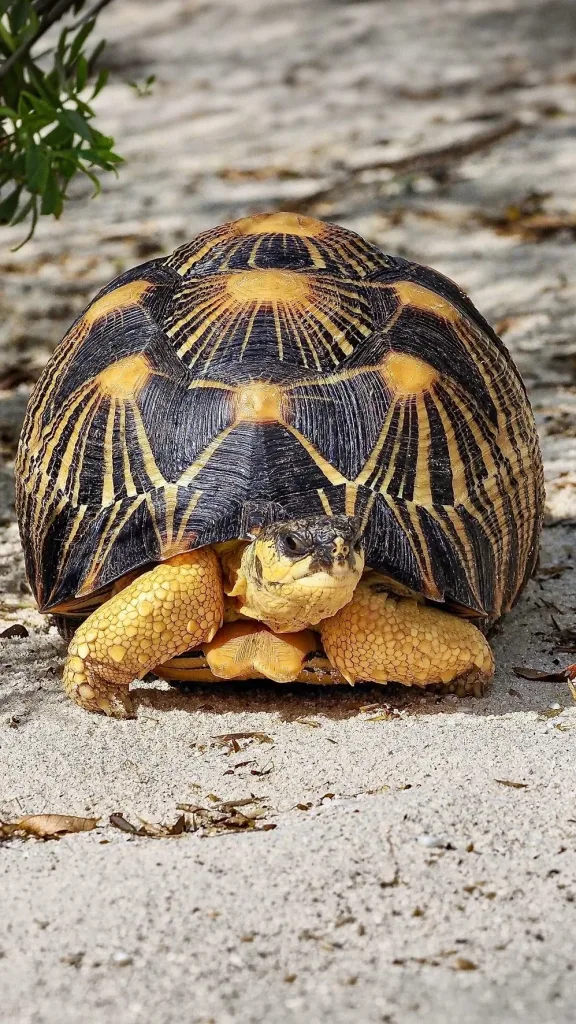
With its dazzling star-patterned shell and ancient, unhurried lifestyle, the radiated tortoise is a living work of art from Madagascar’s dry forests. Native to southern Madagascar, this striking reptile is instantly recognizable thanks to the intricate starburst pattern covering its shell. Each dark, domed scute (the plates that make up the shell) radiates bright yellow lines outward, forming a geometric design that looks almost hand-painted by nature.
Their shells are strongly domed and extremely sturdy, providing protection against predators. The head and limbs are typically yellowish to tan, often with darker scales that blend with the surrounding dry vegetation. Their legs are thick and column-like, adapted for walking rather than speed, and their front legs are covered in tough scales that help protect them when moving through thorny shrubs and spiny plants. Despite their heavy appearance, radiated tortoises can move steadily and surprisingly efficiently when searching for food or water.

Habitat
Radiated tortoises are endemic to the island, found in southern and southwestern Madagascar. Their preferred habitats include dry forests, thorny scrublands, and spiny desert. These landscapes are dominated by plants adapted to drought, including towering baobab trees, spiny euphorbia shrubs, and hardy grasses.
The region experiences long dry seasons and intense sunlight, conditions that radiated tortoises are well adapted to handle. Their domed shells help regulate body temperature by reflecting sunlight, while resting in shade during the hottest periods helps them avoid overheating.

Diet
Radiated tortoises are strict herbivores, meaning their diet consists entirely of plant material. They spend much of their day grazing on a variety of vegetation found in Madagascar’s dry landscapes. Like many tortoises, they rely heavily on their sense of smell to locate food and navigate their surroundings. Their vision also helps them identify bright green plants and flowers from a distance. Their diet commonly includes native grasses, succulent plants, leaves and shoots, fruits that fall from trees, flowers, and cactus pads.
One of their favorite foods is the Opuntia cactus, an introduced plant that has become a common part of their diet in some areas. They are also known to consume fibrous plants that many other animals avoid, using their strong beaks to clip tough stems and leaves.
Because water can be scarce in their environment, radiated tortoises obtain much of their moisture directly from the plants they eat. However, when rainwater collects in shallow pools or depressions, they will drink. Their slow metabolism and ability to survive on relatively low-quality plant material help them thrive in harsh, dry conditions where other animals might struggle.

Behavior
Radiated tortoises lead a relatively calm and deliberate life, spending much of their day slowly moving through their environment in search of food. They are primarily active during the cooler parts of the day, such as early morning and late afternoon. During the hottest midday hours, they often seek shade beneath shrubs, grasses, or fallen branches to avoid overheating.
Although they are generally solitary, radiated tortoises can sometimes be found in loose groups, particularly in areas where food is abundant. Interactions between individuals are usually peaceful, though males may become territorial during the breeding season. When competing for mates, males may push or ram each other with their shells in slow-motion contests of strength.

Reproduction and Life Cycle
Radiated tortoises have a slow and steady reproductive cycle, typical of long-lived reptiles. Breeding usually occurs during the warmer rainy season, when food is more plentiful. Males court females through a series of behaviors including following, nudging, and occasionally making low grunting sounds.
After mating, the female searches for a suitable nesting location, usually selecting sandy or loose soil where she can dig a shallow hole with her hind legs. She may lay 3 to 12 eggs in a single clutch, covering them carefully with soil to protect them from predators and temperature extremes.
The eggs incubate underground for several months, with hatchlings emerging during favorable conditions. Baby radiated tortoises are tiny replicas of the adults, already displaying the distinctive star patterns on their shells. However, their shells are softer and more vulnerable, making the early months of life particularly risky. Young tortoises grow slowly, taking many years to reach full size and sexual maturity. This slow growth, combined with long lifespans, means that stable populations depend on adult survival.
Conservation and Threats
Despite their beauty and ecological importance, radiated tortoises face serious threats in the wild. The species is currently classified as Critically Endangered, primarily due to illegal wildlife trade and habitat destruction.
Thousands of tortoises have been collected illegally for the international pet trade and for consumption in some regions. At the same time, large areas of their natural habitat are being cleared for agriculture, charcoal production, and expanding human settlements.
In response, conservation organizations, governments, and local communities are working together to protect remaining populations. Efforts include anti-poaching patrols, rescue and rehabilitation programs, habitat protection, and public education campaigns. Large confiscations of illegally trafficked tortoises have led to rescue operations where thousands of animals are rehabilitated and eventually returned to protected habitats.
Radiated tortoises have also become a symbol of Madagascar’s conservation challenges and successes, inspiring efforts to preserve the island’s extraordinary wildlife. Protecting this remarkable species means safeguarding not only a beautiful tortoise but also the unique and irreplaceable ecosystems it calls home.