
Red Ruffed Lemur
Varecia rubra
Critically Endangered

STATUS
Critically Endangered
SIZE
Body length: 20 to 22 in (50 to 55 cm)
Weight: 6.5 to 10 lbs (3 to 4.5 kg)
HABITAT
Rainforest
DIET
Fruit, flowers, pollen, some seeds and leaves
LIFESTYLE
Diurnal
Arboreal and terrestrial
Social
REPRODUCTION
Gestation: 102 days
Young: typically 2 or 3, but up to 6
THREATS
Habitat loss
Deforestation
Being hunted as a food source

INTERESTING FACTS
Red ruffed lemurs are among the largest of the lemurs, and because they eat nectar from flowers, they are considered the largest pollinators.
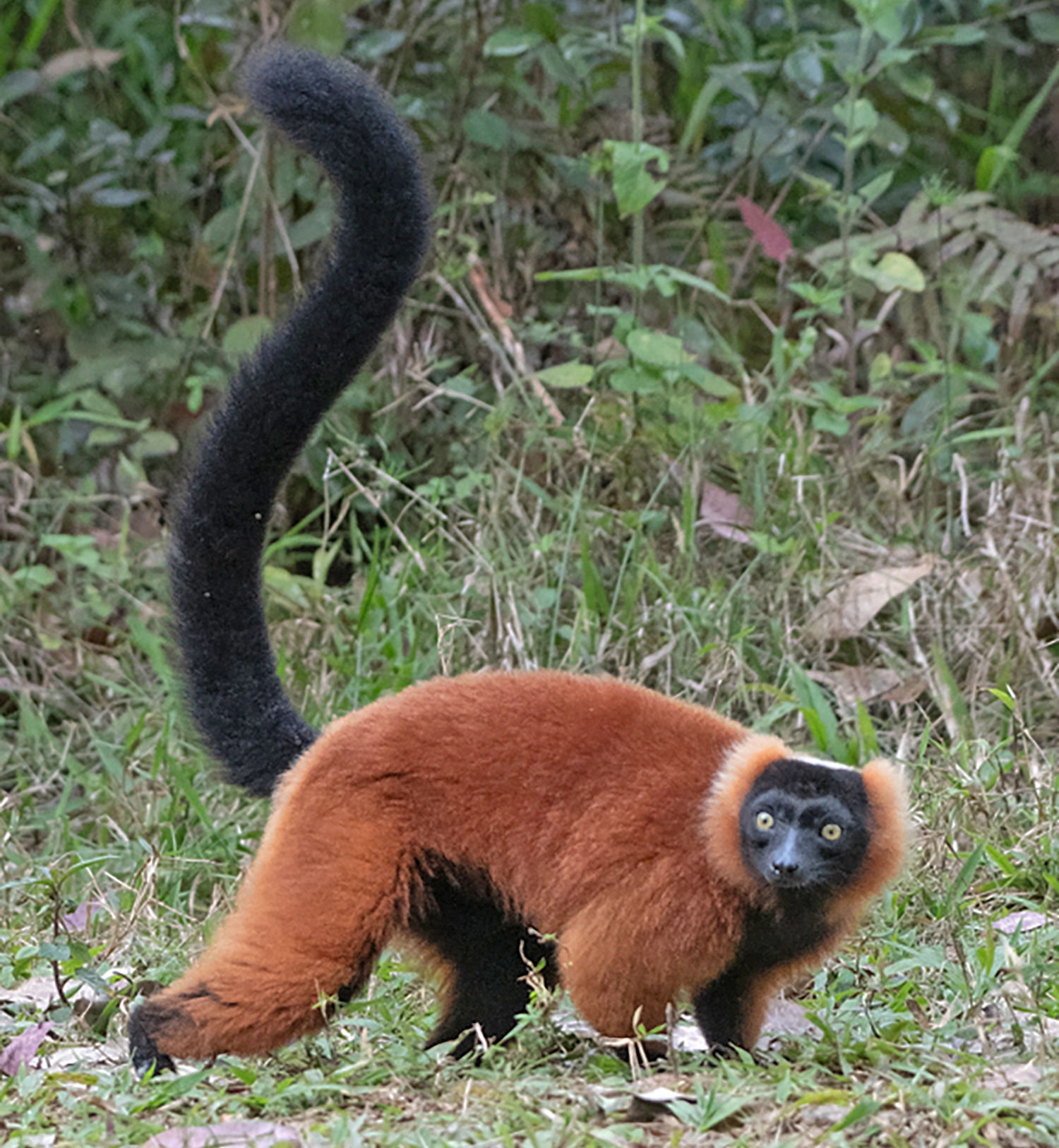
Their tail is study and long, about 23 in (58 cm), and helps them balance as they move in the rainforest canopy.
Unlike many primates, red ruffed lemurs build nests in the trees where they can leave their newborns for safety as the adults forage for food.
While foraging, large groups may break up and some individuals go off on their own, unlike most other diurnal lemurs that forage and move through the forest in cohesive groups.
Characteristics
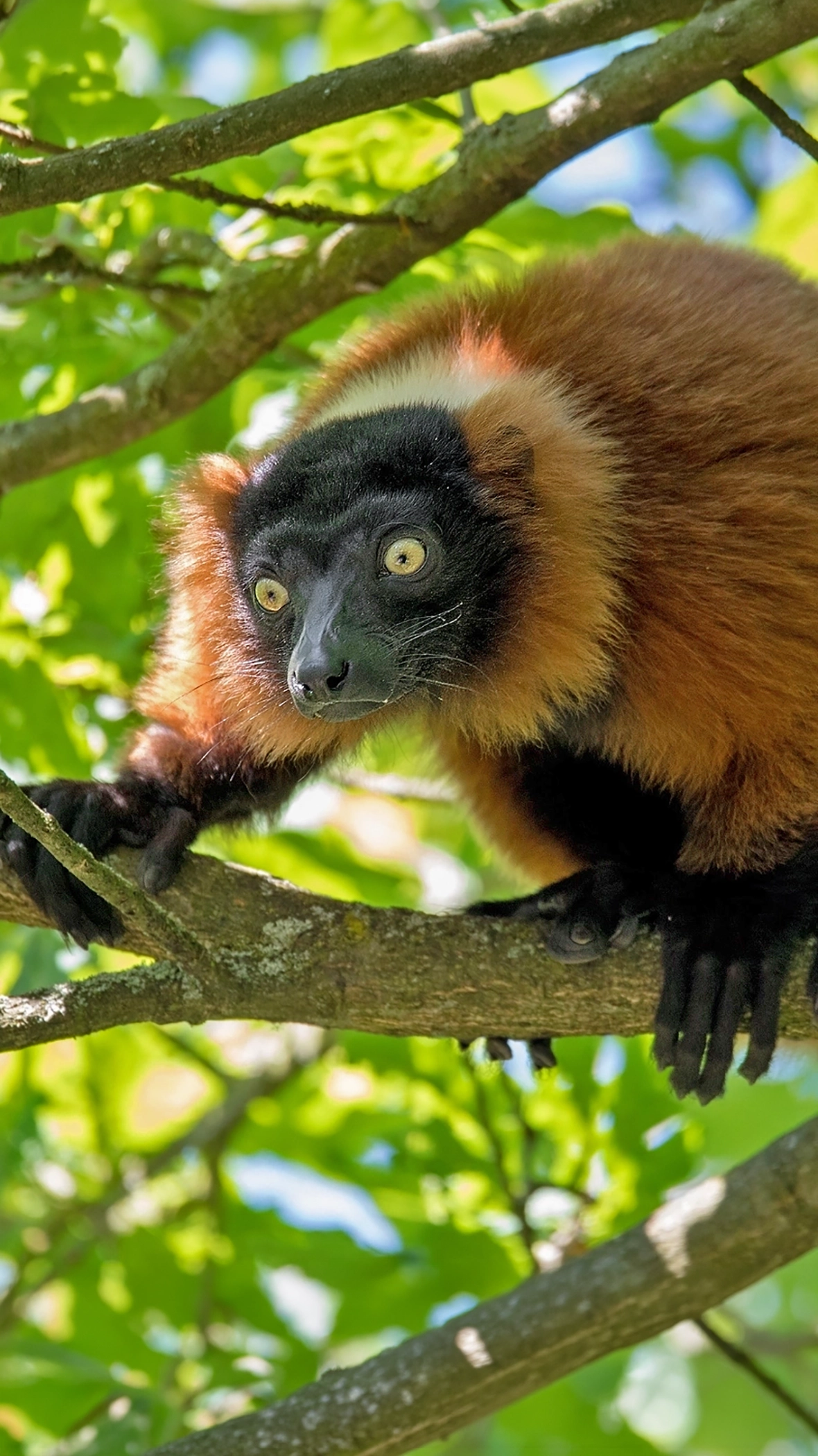
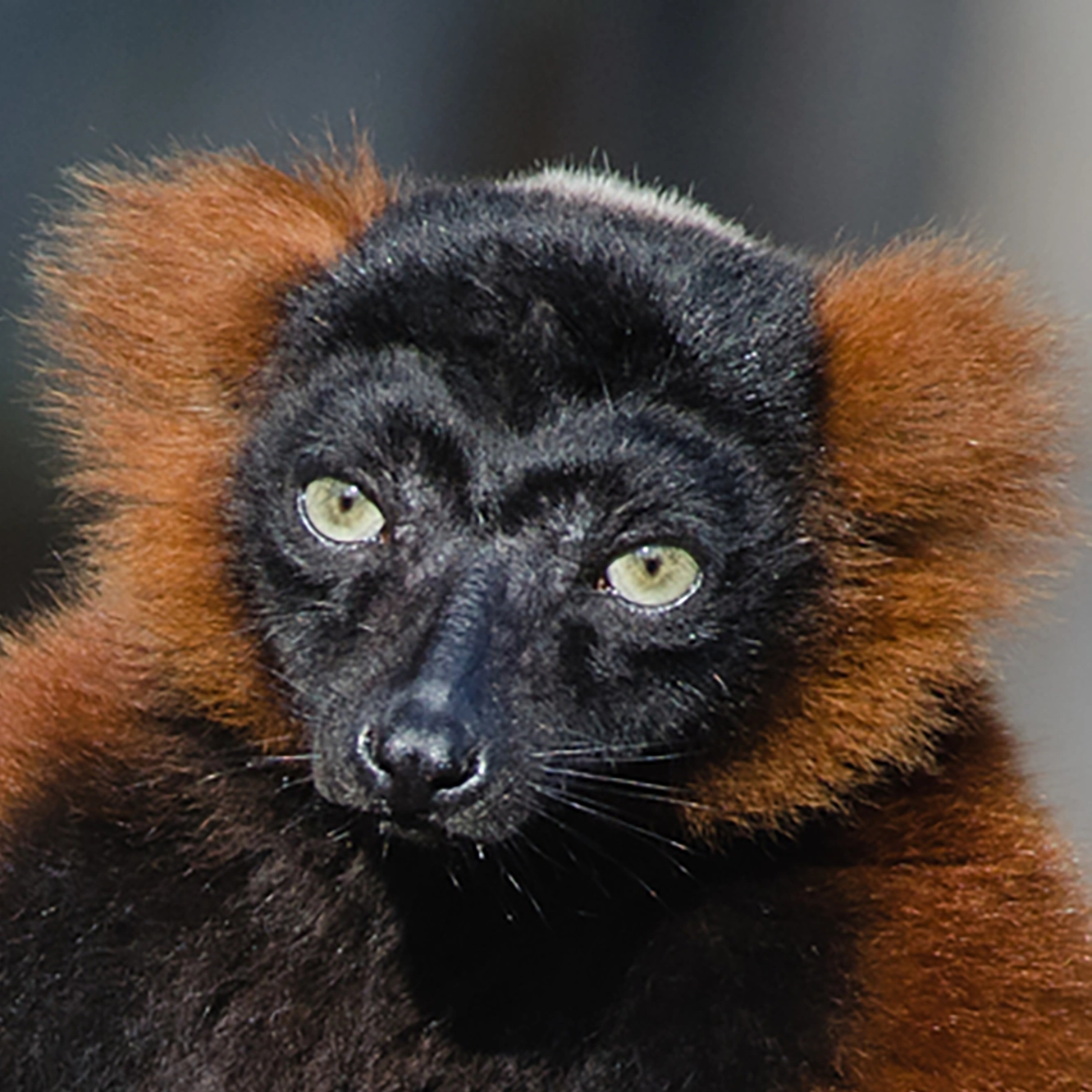
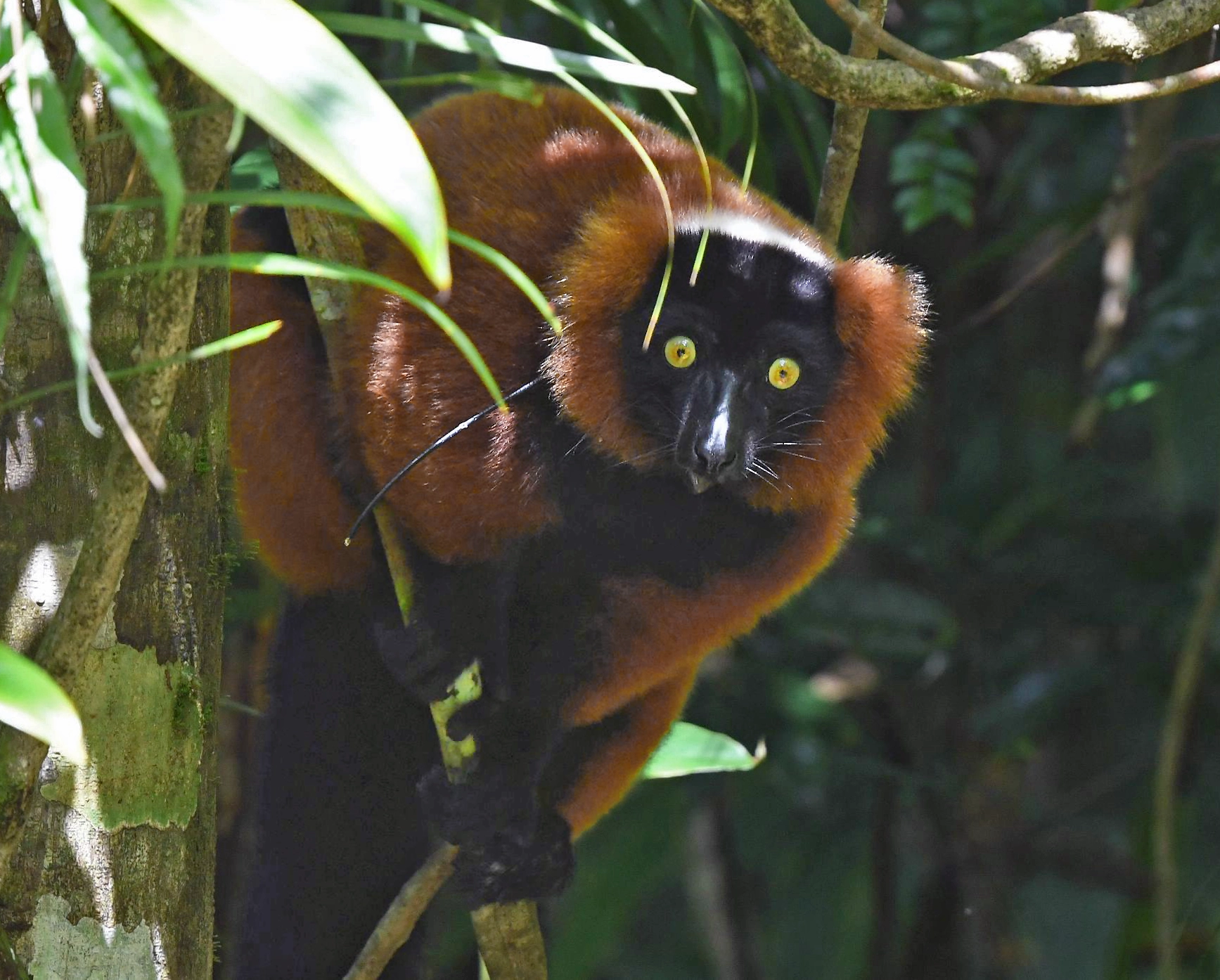
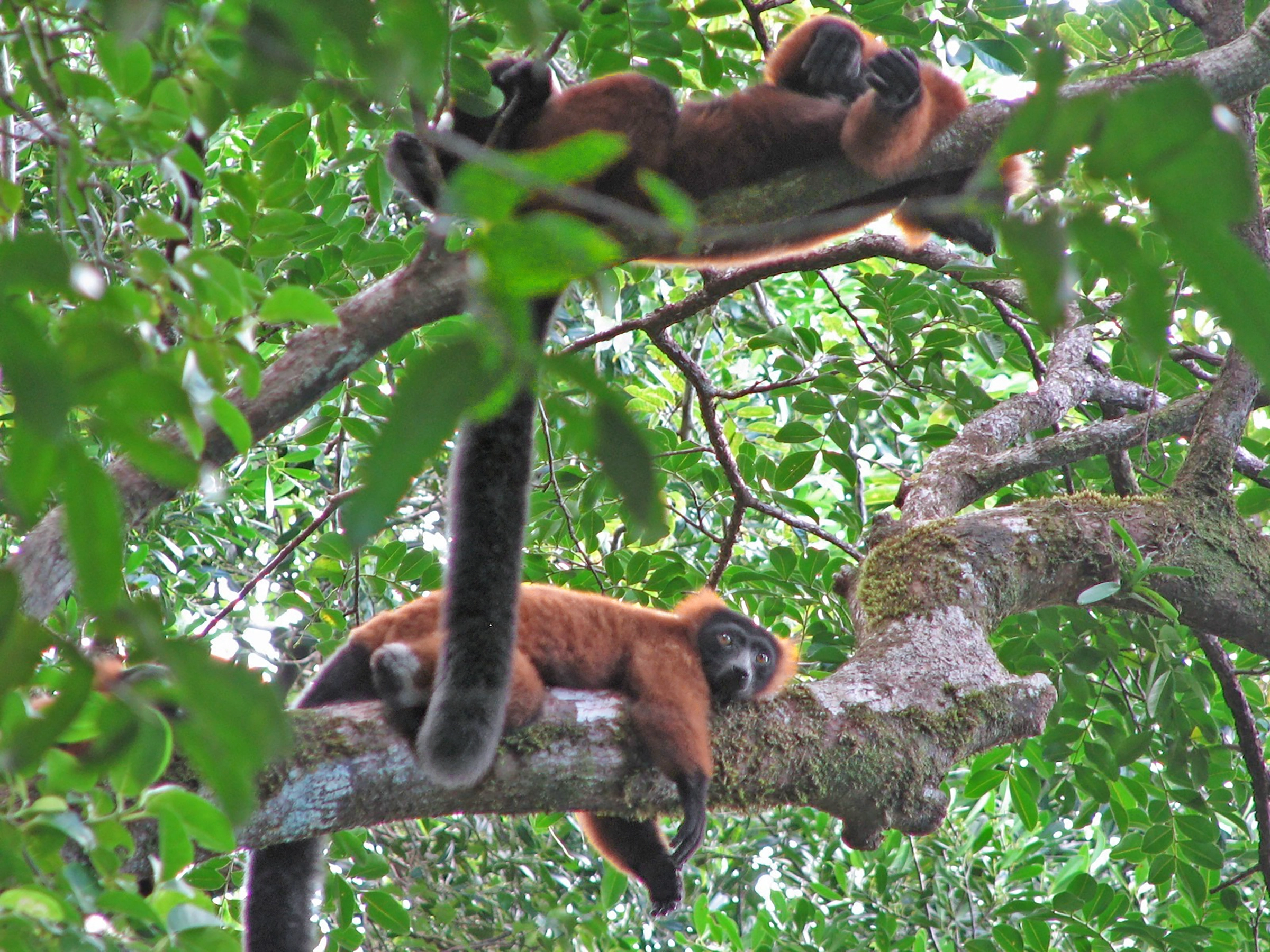
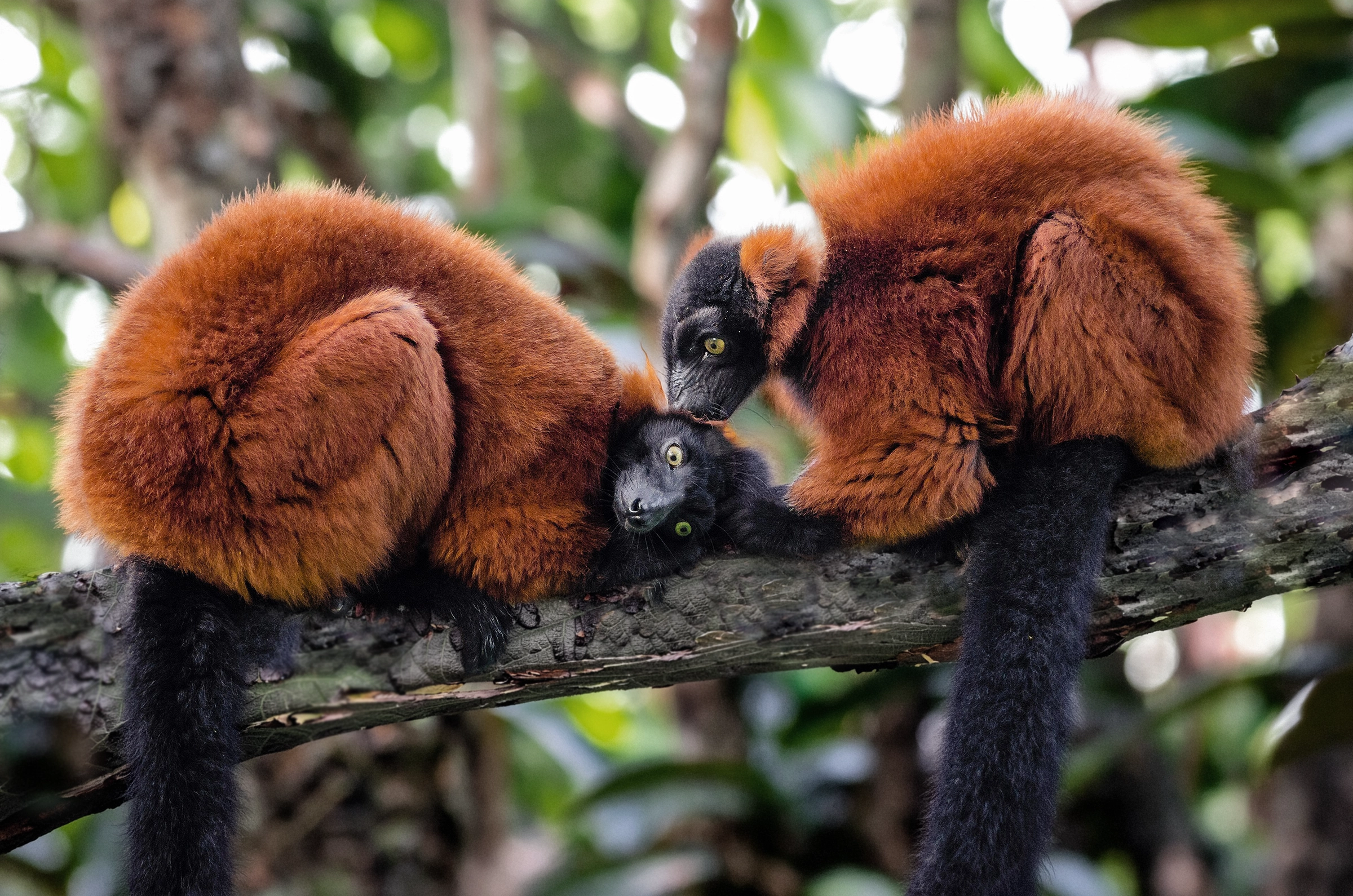
The red ruffed lemur is one of the most visually stunning primates in the world—and one of Madagascar’s most iconic. With vibrant red fur, contrasting jet-black face, hands, feet, and tail, and a fluffy “ruff” of fur around the neck and ears, these lemurs almost don’t look real. Their thick, plush coat not only adds to their dramatic appearance but also helps protect them from frequent rain in their tropical forest home. When the sun is out, they have a built-in way to make the most of it: their chest and belly are black to soak in the warmth as they sit upright in a “yoga” pose and spread out their arms.
Their expressive golden eyes are forward-facing, giving them excellent depth perception for navigating the forest canopy. Their hands and feet are highly dexterous, equipped with long fingers for gripping branches and manipulating food, and their long, sturdy tail helps them balance as they run and leap through the canopy. Like other lemurs, they have a specialized “toothcomb” formed by their lower front teeth, which is used for grooming.
Habitat
The red ruffed lemur is found only in northeastern Madagascar. It inhabits lowland tropical rainforests, particularly within the Masoala Peninsula. These forests are characterized by dense, multi-layered canopies; high rainfall and humidity; and rich plant diversity. The lemurs depend on intact, undisturbed forest habitats, especially those with tall trees that produce abundant fruit. Because they spend most of their time in the canopy, they are particularly sensitive to habitat fragmentation—gaps in the forest can limit their ability to travel and find food.
Foods and Feeding
Red ruffed lemurs are primarily frugivores, feeding mostly on fruit, nectar, and pollen. They play a crucial ecological role as seed dispersers, helping maintain the health and regeneration of Madagascar’s forests. They can swallow large seeds, which pass through their gut undigested and are excreted onto the forest floor in their own packets of “fertilizer.” They are also pollinators: when flowers are available, the lemurs feed on the nectar by sticking their long nose deep into the flower, coming away coated with pollen that they pass along to the next flower.
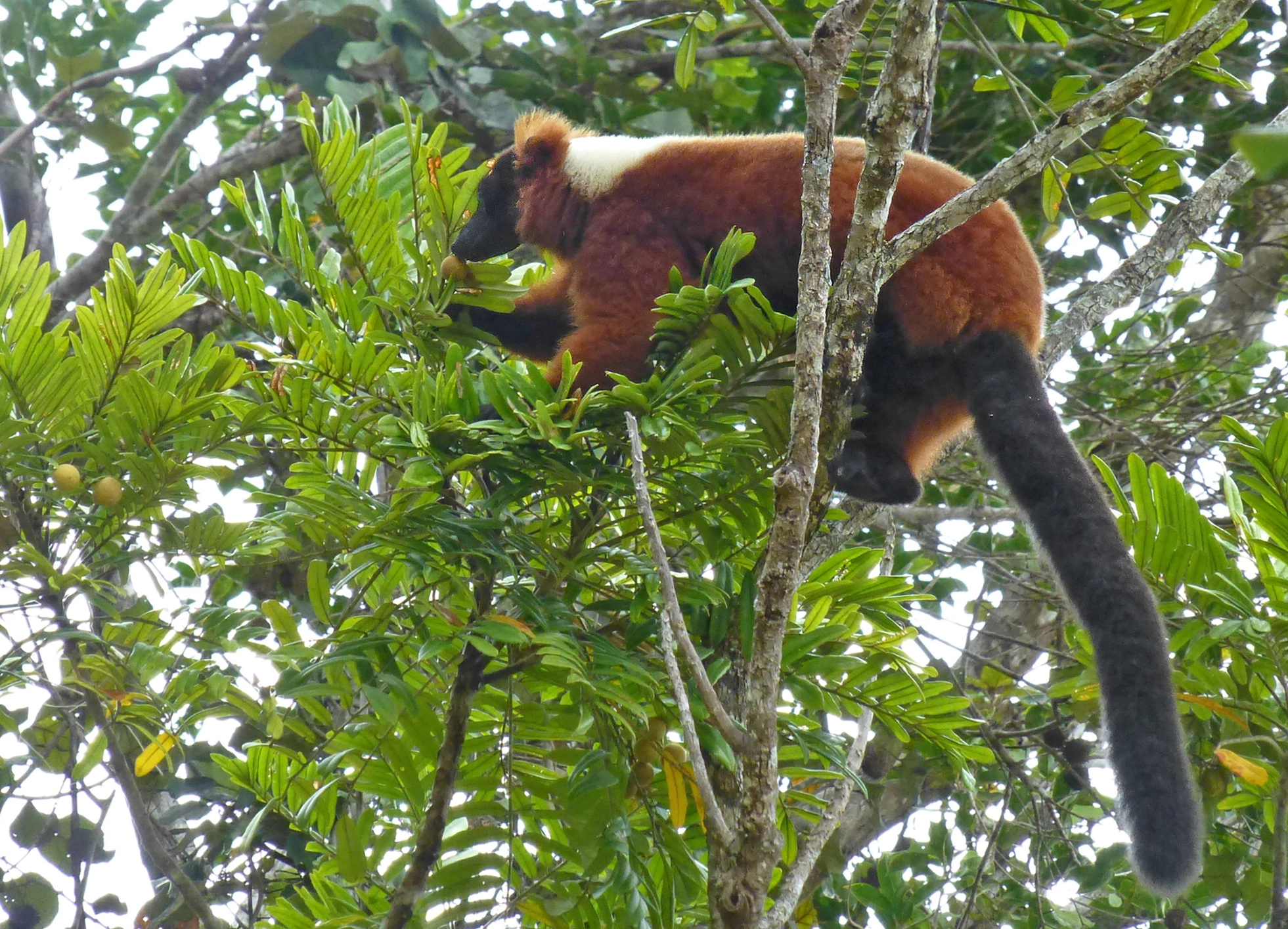
Foraging usually takes place high in the canopy, where the lemurs carefully select ripe fruits. Their strong jaws and teeth allow them to process a variety of plant materials, while their keen eyesight helps them spot food from a distance. Seasonal changes in fruit availability can influence their movement patterns and social behavior.
Unfortunately, many of the larger fruit trees essential for the survival of the ruffed lemur are also regarded as the most desirable hardwoods by logging interests and are often the first to be cut down when a forest is selectively cut. Thus, the presence of healthy populations of ruffed lemurs is considered an important indicator of a healthy tropical forest.
Behavior
Red ruffed lemurs are diurnal and highly social, often living in loose groups that can range from 2 to 30 individuals. They are led by dominant females who establish hierarchies and defend territory. The social structure is flexible, described as a “fission-fusion” system—meaning the group may split into smaller subgroups during the day and reunite later. This helps them adapt to changing food availability in the forest, especially during the dry season when food is less plentiful.
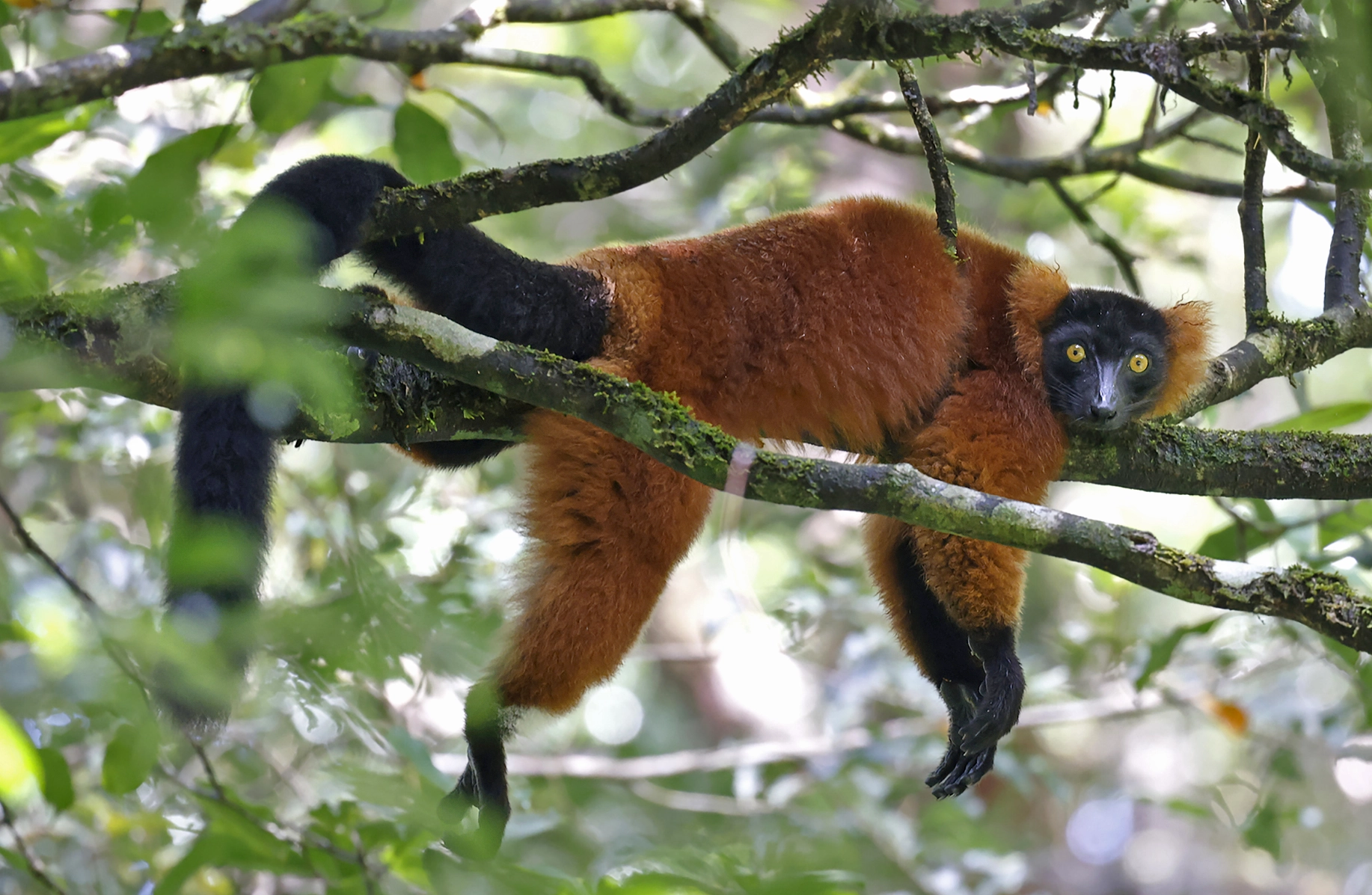
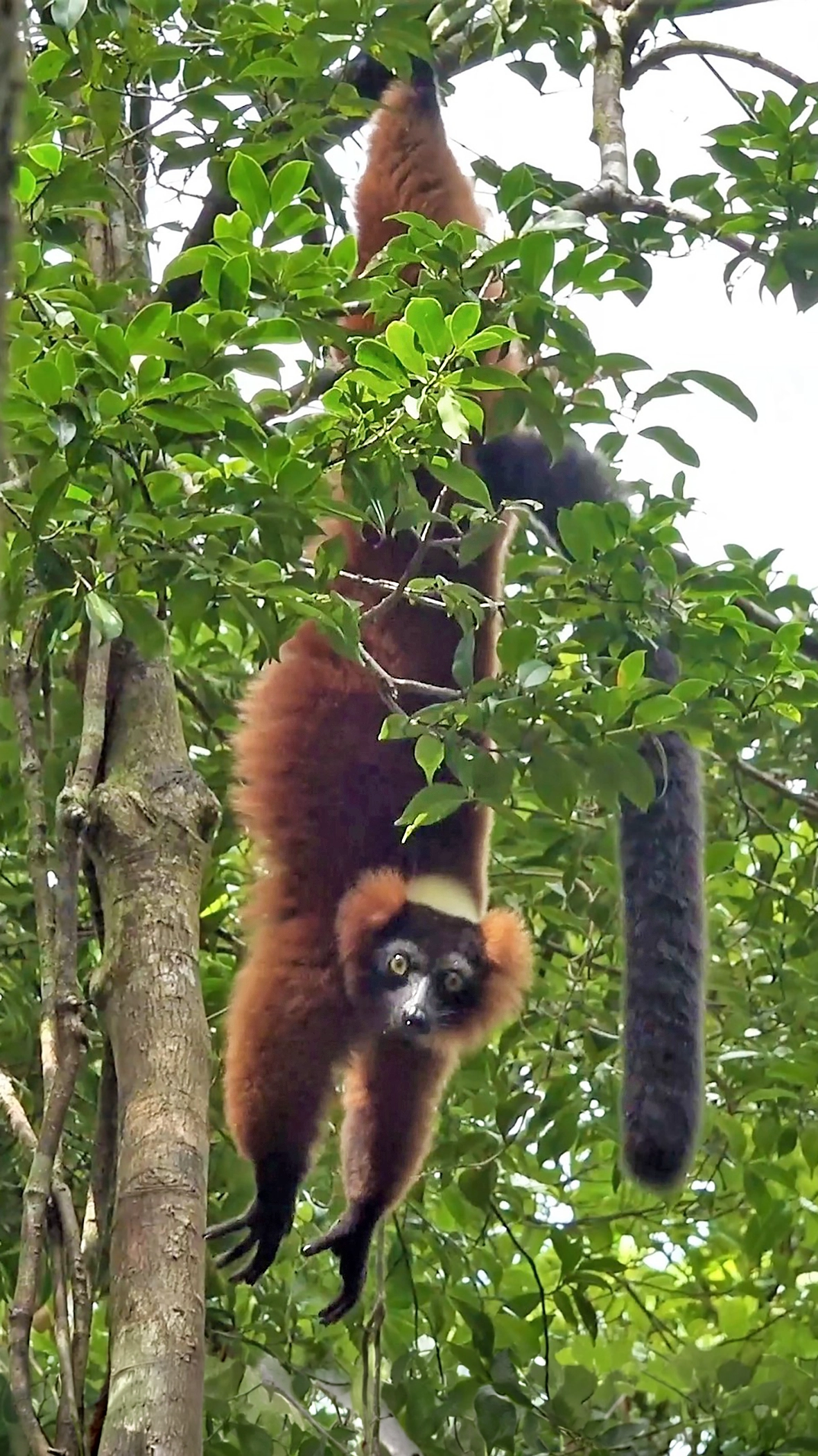
Highly arboreal, red ruffed lemurs spend most of their lives in the upper canopy, where they leap, climb, and move gracefully between branches. They are energetic and curious, often seen exploring their surroundings or engaging in social grooming, which strengthens bonds within the group.
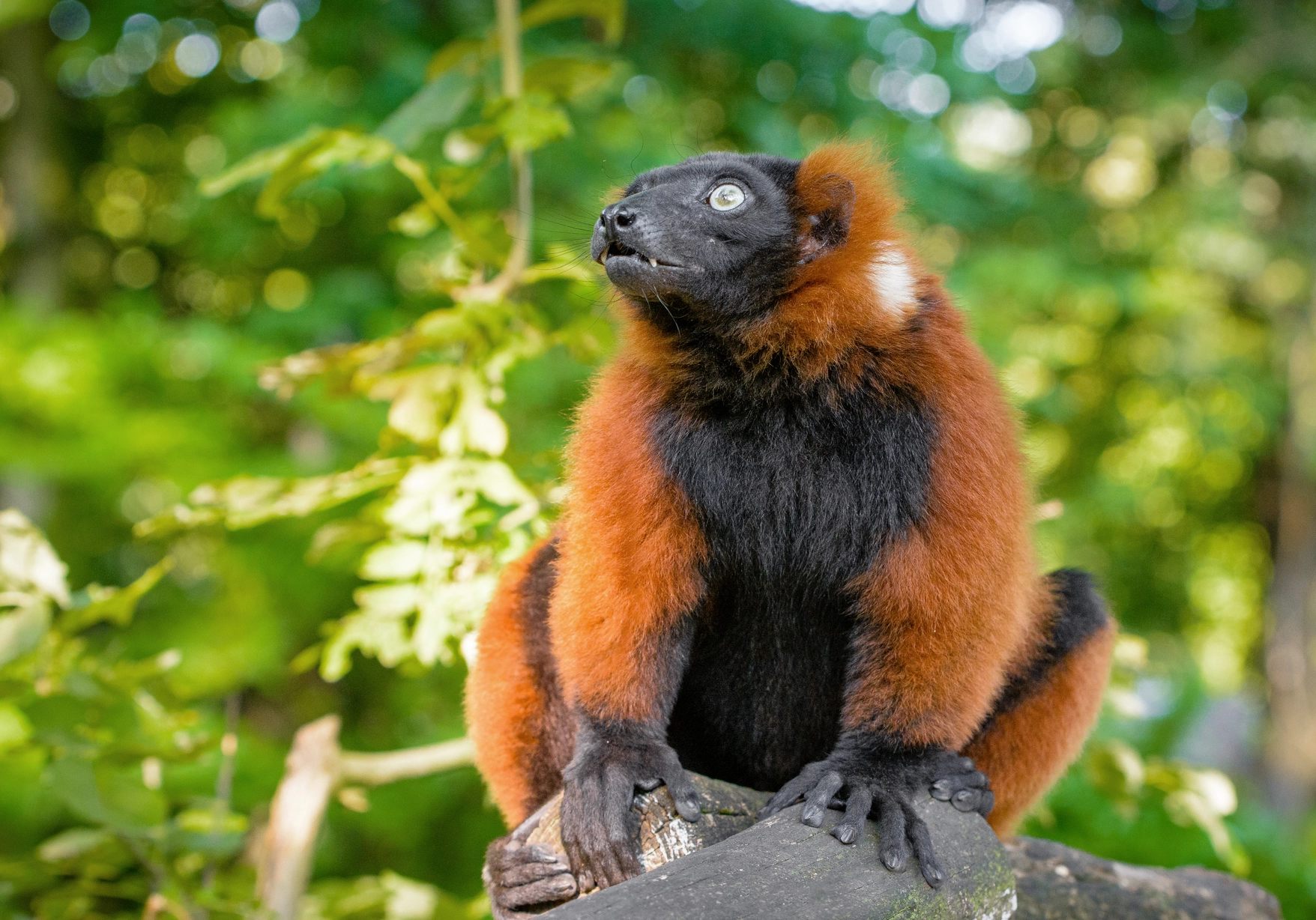
They are among the most vocal of the lemurs, using a wide range of calls to communicate. These vocal displays are sometimes performed as a group, creating powerful choruses that resonate through the trees. Their loud, echoing roars, barks, and grunts can carry long distances through the rainforest and allow distant members of the same group to maintain contact, even when foraging separately. Calls are also used to announce and defend territory or alert other groups members to the presence of a predator.
Reproduction and Life Cycle
Red ruffed lemurs have an unusual reproductive strategy compared to many other primates. Breeding typically occurs once a year, and females give birth to litters of two to six infants—a relatively high number for primates. Unlike most lemurs, mothers do not carry their infants constantly. Instead, they build well-concealed nests 30 to 60 feet (10 to 20 meters) high in the trees, where the babies remain for the first few weeks of life.
At birth, the infants are not capable of grasping the mother, so if she needs to transport them, she picks up one infant at a time in her mouth. The mother returns frequently to nurse and care for them, sometimes moving them between nest sites for safety. In the days following birth, if the mother needs to leave the nest, the father may stand guard close by.
As the infants grow stronger, they begin to explore their surroundings. They develop rapidly, and by three or four weeks of age, they are capable of at least attempting to follow their mother on their own, and eventually they join the group. Alloparenting—care provided by other group members—can occur, helping support the mother and increasing the young’s chances of survival. The young reach maturity at three to four years of age.
Conservation and Threats
The red ruffed lemur is currently classified as Critically Endangered, facing a high risk of extinction in the wild. The primary threats include deforestation for agriculture, logging, and development; habitat fragmentation, which isolates populations; hunting for bushmeat in some area; and impacts of climate change on the forests they live in. Because they rely so heavily on large, fruiting trees, the loss of rainforest habitat has a particularly severe impact on this species. But conservation efforts are actively underway to protect remaining populations. These include protecting areas where they live, such as Masoala National Park; reforestation and habitat restoration programs; and community-based conservation education programs.
Red ruffed lemurs are important ambassadors for rainforest conservation, helping raise awareness about the importance of protecting Madagascar’s unique biodiversity. They are more than just a beautiful primate—they are a vital part of Madagascar’s rainforest ecosystem. By spreading seeds and pollinating plants, they help keep the forest alive. Protecting this remarkable species means preserving one of the most extraordinary habitats on Earth.
